



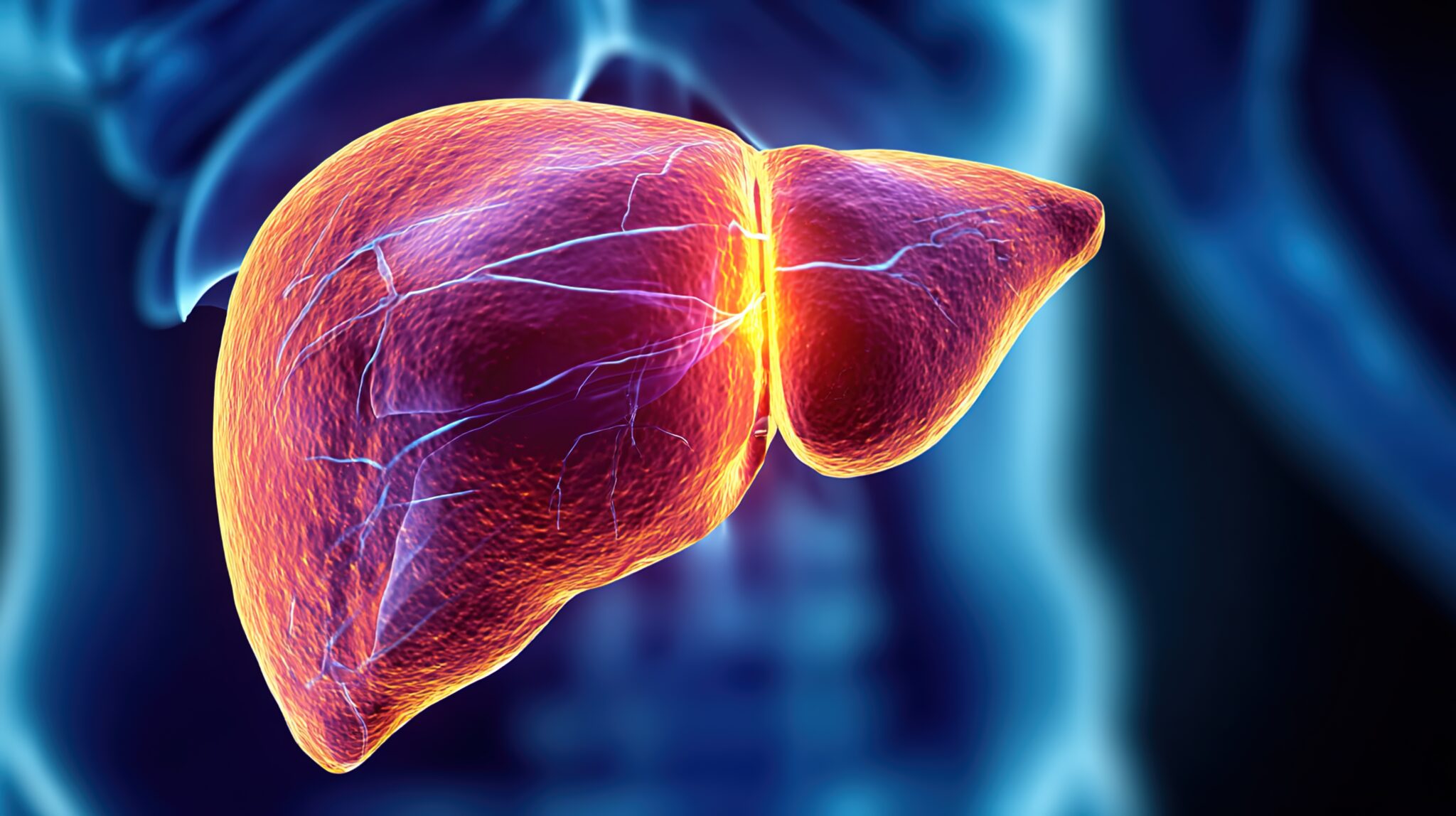
People who regularly eat late at night or even after going to bed may be putting more strain on their livers in the long term than previously thought. A comprehensive study by American researchers suggests that the timing of meals may be linked to the risk of liver disease. What matters may not only be what we eat, but also when we provide our bodies with food.
Large-scale, Long-term Data Suggest a Link
For many people, a small snack before bed is part of their daily routine. Some reach for something sweet after dinner, others eat while watching TV, or grab a snack from the fridge late at night. What is often considered a harmless habit is now coming under greater scrutiny in medical research.
Scientists at Oregon Health & Science University (OHSU) in the U.S. have investigated a possible link between late-night eating and an increased risk of liver disease. Their findings suggest that people who regularly eat after dinner or close to bedtime may be more likely to develop certain liver diseases. According to the study published in the journal *Clinical Gastroenterology and Hepatology*, the observed risk among these individuals was about 20 to 30 percent higher than among people who avoided eating late. The findings raise an important question: Could the amount of time between the last meal and bedtime make a difference for liver health?

For their study, the research team analyzed data from three large-scale American health studies. These included the Nurses’ Health Study, the Nurses’ Health Study II, and the Health Professionals Follow-up Study. In total, data from nearly 200,000 people were included in the analysis. The participants had provided information on their dietary habits, daily routines, and other lifestyle factors. The researchers examined how different mealtimes correlated with the documented liver diseases.
They were particularly interested in metabolic and steatotic liver disease (MASLD). This condition was previously known primarily as nonalcoholic fatty liver disease. The scientists also examined liver cirrhosis, a condition in which healthy liver tissue is progressively replaced by scar tissue. The analysis revealed a link between regularly eating late and an increased risk of the liver diseases studied. Participants who ate after dinner or close to bedtime had a risk that was approximately 20 to 30 percent higher than that of comparison participants who avoided such late meals.
This finding is particularly interesting because the researchers did not focus exclusively on the composition of the diet. Instead, they focused on another influencing factor: the time at which food is consumed. However, an important limitation must be noted. The results show a statistical association but do not prove that eating late at night itself caused the liver diseases. Nor can it be concluded from these findings that everyone who occasionally eats something at night automatically has an increased risk of developing the disease.
Why Fatty Liver Disease Can Become Problematic in the Long Term
The liver performs numerous vital functions. It processes nutrients, regulates metabolism, stores energy, and helps maintain balanced blood sugar levels. It is also involved in processing medications and breaking down various metabolic byproducts. If too much fat accumulates in the liver cells over an extended period, fatty liver disease can develop. The condition often goes unnoticed for a long time because it does not necessarily cause any clear symptoms, especially in the early stages. Metabolic fatty liver disease is particularly closely linked to metabolic problems. These include, among others, obesity, insulin resistance, and type 2 diabetes. Other health factors can also play a role.
For some of those affected, the condition remains a relatively uncomplicated accumulation of fat. In others, inflammation develops in addition, which can damage the liver tissue. As the condition progresses, scarring may occur, which can ultimately lead to cirrhosis of the liver. Cirrhosis is a serious condition because the altered tissue can impair the liver’s normal function. The risk of serious complications increases when the disease is advanced. However, researchers point out that by no means does everyone with fatty liver disease progress to this stage. This is precisely why it is important to investigate potential risk factors early on and to identify scientifically sound prevention strategies.
A systematic review of 37 randomized controlled trials, published in 2025 in the journal BMC Medicine , provides further evidence that diet plays an important role in liver health . The researchers examined various dietary and exercise programs in people with metabolically related fatty liver disease. Compared to the control groups , a Mediterranean diet was associated with improvements in body weight, waist circumference , and the liver enzyme ALT, among other things . The results suggest that a dietary change can support the treatment of fatty liver disease . However , the strength of the evidence varied depending on the outcome examined , and not all changes can be assessed with the same degree of certainty .
The Body’s Internal Clock also Influences Metabolism
Why might the timing of a meal, of all things, be important for the liver? One possible explanation lies in what are known as circadian rhythms. These are biological processes that are roughly aligned with the 24-hour day and influence numerous bodily functions. Among other things, they help coordinate sleep, wakefulness, hormone release, and metabolism. This internal timing mechanism is often associated with the sleep-wake cycle. In fact, however, it affects far more than just when we get tired.

The liver also has a distinct biological timing mechanism. Its metabolic processes change throughout the day. Depending on the biological phase, the body processes nutrients and regulates energy supply differently. When people eat at a time when the body is already preparing for nighttime rest, this could disrupt the balance between food intake, energy utilization, and the biological clock.
This does not mean that metabolism comes to a complete standstill during the night. Rather, its processes change. A late meal may therefore encounter different physiological conditions than the same meal eaten during the day. Scientists suspect that this shift in timing, if it occurs regularly, could play a role in long-term metabolic health.
Not Only the Amount, But also the Timing of Meals May Matter
When it comes to fatty liver disease, the focus has so far been primarily on known risk factors. These include, among other things, being overweight, an unfavorable metabolic state, and certain dietary habits. The new study draws attention to another potential factor: the timing of daily calorie intake. The study’s lead author, Dr. Robert Wilechansky, a hepatologist and liver transplant specialist at OHSU, is investigating how mealtimes might affect liver health. His interest was piqued, in part, by earlier findings regarding people who work at night. For shift workers, sleep and meal times can deviate significantly from typical daily rhythms. Increased rates of various metabolic and cardiovascular problems have also been observed in this population.
Such observations provide a potential starting point for further research. When sleep, the biological clock, and food intake are no longer well synchronized, unfavorable metabolic conditions could develop. However, it cannot be directly inferred from the findings on shift work that eating late has the same consequences for everyone. Work schedules, sleep duration, physical activity, dietary quality, and other factors can also play a role. Nevertheless, so-called chrononutrition—the study of the relationship between nutrition and the body’s biological clock—is gaining increasing importance. It examines how the timing of meals might affect nutrient processing and overall health.
What Happens When We Eat Right Before Bedtime?
After a meal, the body must process the nutrients it has absorbed. Carbohydrates are used, among other things, to produce energy or are stored; fats are further processed; and proteins are made available for various tasks. These processes also take place in the evening. However, a key factor may be how well they align with the body’s biological rhythms.
If food intake regularly occurs during the biological night, metabolic regulation could be adversely affected. Previous studies cited by the researchers suggest that eating during the biological night can impair the digestion of food. Such changes, in turn, could be linked to factors relevant to the development of obesity, diabetes, and other metabolic disorders. Since the liver plays a central role in metabolism, it makes sense to also investigate potential effects on this organ in greater detail.
Nevertheless, caution is advised when interpreting these findings. The current study does not prove that a single late meal damages the liver. Nor does it show the exact time after which eating becomes problematic or how many hours should elapse between dinner and bedtime to achieve a health benefit. Furthermore, the time of day alone is not necessarily indicative. For people who regularly work late or have a shifted sleep schedule, their biological night may occur at a different time than for those with a traditional daily routine.
Why the Results Do Not Yet Provide Proof
As interesting as the observations are, the study has limitations. The most important one concerns the study design. It was an observational study. The researchers analyzed existing data and compared specific behavioral patterns with health outcomes. They did not divide the participants into groups according to a controlled experimental design, with some required to eat late and others early. Therefore, the researchers cannot definitively determine whether late mealtimes were actually responsible for the increased risk.
It is conceivable, for example, that people who eat late also differ in other lifestyle characteristics. They might sleep less, work shifts more frequently, or have different dietary and exercise habits. Other factors not fully accounted for in a statistical analysis could also influence the results. An additional limitation is that the data on meal times were based on information provided by the participants. Such self-reported data are useful but can be inaccurate. Furthermore, general information about late meals does not always reveal how large the portions were, what foods were eaten, or how much time actually elapsed before bedtime.
The figure of 20 to 30 percent must also be properly contextualized. It describes the relative risk observed in the study and does not automatically imply an increase of 20 to 30 percentage points. Without knowing the specific baseline risks, it is not possible to determine how many additional people would actually develop the disease. The results therefore point to a possible risk factor but do not yet provide a basis for the claim that eating late inevitably leads to fatty liver disease or cirrhosis.
A Clinical Study is Intended to Provide More Clarity
Further research is needed to determine whether eating earlier actually benefits the liver. Studies in which mealtimes are specifically altered and the health effects are then measured over a defined period would be particularly important. According to the university, Robert Wilechansky is participating in a clinical study that addresses precisely this question. Among other things, the study aims to examine whether shifting meal times to earlier in the day can produce measurable improvements in people with existing fatty liver disease.
Such an approach could yield important insights because it allows for more direct tracking of meal times and a more targeted examination of changes. The central question is whether liver health actually improves when people eat their last meal earlier, while keeping other aspects of their diet as consistent as possible. Should such benefits be confirmed in controlled studies, the timing of meals could play a complementary role in the prevention and treatment of metabolic liver diseases in the future. Until then, it remains unclear how significant a potential effect might be, which individuals might benefit most, and what time interval between the last meal and bedtime would be optimal.
What Practical Implications Can We Draw for Everyday Life Today?
The results provide no cause for panic if you occasionally get hungry late in the evening. Nor do they justify strict dietary rules that are supposed to apply equally to everyone. However, anyone who wants to support their liver health can keep a few general recommendations in mind:

- Aim for regular mealtimes: A daily routine that’s as consistent as possible can help you better coordinate your meals and sleep.
- Avoid large meals right before bedtime, if possible: If you regularly eat very late, try moving your dinner time up a bit.
- Pay attention to your overall diet: The quality and quantity of the food you eat remain important aspects of metabolic health. Timing alone is no substitute for a balanced diet.
- Get enough sleep: A regular sleep schedule is an important part of a healthy lifestyle.
- Take known risk factors seriously: If you are overweight, have diabetes, or have already been diagnosed with fatty liver disease, it may be advisable to seek medical advice and tailor appropriate measures to your individual needs.
These recommendations are general measures to support a healthy lifestyle. They do not prove that a specific mealtime can reliably prevent liver disease. Even people who have to eat late because of their work should not put unnecessary pressure on themselves. Whether and to what extent changes in mealtimes have an effect may depend on several factors. Research still needs to clarify which adjustments actually provide health benefits in which situations.
The Liver May Respond More Strongly to Eating Patterns than Previously Thought
The study by Oregon Health & Science University expands the discussion on the causes and potential risk factors of liver disease. Its findings suggest that regularly eating late may be associated with an increased risk of certain liver diseases. One possible explanation is the close connection between the body’s internal clock, the sleep-wake cycle, and the liver’s metabolic functions. However, it has not yet been conclusively determined whether eating the last meal earlier actually protects the liver.
Until further studies are available, it makes sense to view the findings as scientific evidence rather than definitive proof. The big picture remains crucial for liver health: diet, exercise, sleep, and an individual’s metabolic profile must all be considered together. Perhaps future research will show that not only the choice of foods we eat but also the timing of their consumption plays a greater role in long-term health. This is still an open question in research—but one that could be of considerable importance given the widespread prevalence of fatty liver disease.