




Mediterranean, Nordic, or plant-based: A large-scale study involving approximately 7,500 people links various healthy eating patterns to slower biological aging. It appears that the quality of daily food choices is more important than any specific diet. Can the right diet help us stay healthy longer? A comprehensive study by the German Center for Neurodegenerative Diseases (DZNE) provides new evidence that our eating habits are linked to the biological aging process. What’s interesting is that it doesn’t always have to be the same type of diet. Various dietary approaches—from the Mediterranean diet to the Nordic diet to the DASH diet—showed associations with slower biological aging.
For the study, the scientists analyzed dietary data and blood samples from a total of about 7,500 men and women. The results were initially determined using the DZNE’s Rhineland Study in Bonn and subsequently independently verified with data from the EPIC-Potsdam Study. The scientific paper was published in the journal *Nature Communications *. The key message is encouraging: People who follow a healthy diet may not only support their overall health but also potentially influence processes associated with aging. However, the observed associations were relatively weak. Furthermore, the study does not prove that a specific diet directly slows down aging or reliably prevents future diseases.
What Does Biological Age Actually Mean?
A person’s date of birth reveals how many years they have lived. However, it provides only limited insight into the condition of their body. Two people of the same age can differ significantly in terms of their physical performance, metabolism, and health.

This is where the concept of biological age comes in. It is intended to provide an indication of how far certain aging processes have progressed in the body. To this end, scientists examine, among other things, molecular changes that occur as a person ages.
The current study focused on DNA methylation. These are chemical markers on the DNA that play a role in regulating gene activity. They change over the course of a person’s life and can therefore serve as indicators of biological aging processes.
The research team examined these changes using three so-called epigenetic clocks. In total, the scientists were able to analyze approximately 850,000 sites in the genome. From these patterns, they were able to derive various metrics for biological age and the rate of certain aging processes.
It is important to note the distinction here: A more favorable value for these metrics does not automatically mean that a person will demonstrably live longer. Rather, it provides evidence that certain molecular processes may be associated with healthier aging.
A Scientific Comparison of Ten Dietary Patterns
The researchers examined ten different dietary patterns or dietary assessments. These included well-known concepts such as the Mediterranean, Nordic, plant-based, DASH, and MIND diets. Other assessment approaches are based, among other things, on overall high dietary quality or on recommendations for health-promoting food choices.
The scientists assessed how well the participants adhered to the respective recommendations. To do this, they compared the participants’ food consumption data with the criteria of each dietary pattern and converted the results into point scores.
The results showed that the dietary patterns differed significantly in some cases. Participants who scored particularly well on one dietary pattern did not necessarily meet the criteria of another. Only a few participants were simultaneously ranked among the groups with the highest dietary quality across all evaluated measures.
Despite these differences, a consistent overall picture emerged: A stronger alignment with any of the dietary patterns examined—provided it was classified as health-promoting—was associated with more favorable markers of biological aging.
Some associations were stronger than others. However, the absolute differences remained relatively small. The researchers were unable to identify a clear winner that significantly outperformed all other dietary patterns.
1. Mediterranean Diet: Plenty of Vegetables, Legumes, and High-Quality Fats
The Mediterranean diet is one of the best-known dietary approaches when it comes to cardiovascular health and healthy aging. It is modeled after the traditional cuisine of certain regions around the Mediterranean. It is not a rigid meal plan, but rather a combination of typical foods and eating habits.
 What Does it Include?
- Plenty of vegetables and fruits, as varied and seasonal as possible.
- Legumes such as lentils, beans, and chickpeas.
- Whole-grain products, nuts, and seeds.
- Olive oil as an important source of plant-based fats.
- Fish and seafood on a regular basis.
- Eggs, dairy products, and poultry in moderate amounts.
- Less red and processed meat, as well as fewer highly processed foods.
A key feature is the type of fats. Olive oil and nuts provide mostly unsaturated fatty acids, which can play a beneficial role in a balanced diet. In addition, there is dietary fiber from vegetables, fruits, legumes, and whole-grain products.
A typical day might start, for example, with oatmeal, plain yogurt, and berries. Lunch might consist of a lentil salad with tomatoes, cucumbers, and olive oil, and dinner could be fish with vegetables and whole-grain bread. A purely plant-based dish featuring beans or chickpeas also fits perfectly into this approach.
The Mediterranean diet is not a short-term weight-loss diet. Rather, it is designed to be sustainable in the long term as part of everyday life and is based on a wide variety of nutrient-rich foods.
What Does this Mean for Aging?
The new study links a stronger adherence to the Mediterranean diet with more favorable epigenetic markers of aging. However, it does not prove that olive oil, fish, or any single other food is responsible for this association. It is more likely that the overall combination of dietary habits plays a role.
2. The Nordic Diet: Eating Healthy with Local Foods
The Nordic diet follows a similar basic principle as the Mediterranean diet but focuses on foods that are traditionally common in Northern Europe. It demonstrates that a healthy diet does not have to rely on exotic ingredients or imported specialty products.
The Key Components are:
- Oats, rye, barley, and other whole-grain products.
- Root vegetables such as carrots, beets, and parsnips.
- Cabbage, leafy greens, and other regional vegetables.
- Berries, such as blueberries, raspberries, and cranberries.
- Legumes, nuts, and seeds.
- Fish, including fatty varieties such as herring and mackerel.
- Canola oil as an important source of unsaturated fatty acids.
Whole-grain rye, oats, and other high-fiber grain products are particularly notable. They can aid digestion and help you feel full longer. Berries provide vitamins and phytochemicals, among other nutrients, while fish can contribute valuable fatty acids and protein.
A Nordic-inspired meal plan might consist of an oatmeal breakfast with berries, rye bread with hummus and vegetables for lunch, and baked fish with potatoes and cabbage for dinner. Those who do not eat fish can include legumes and other suitable protein sources more frequently.
A practical advantage: Many ingredients are readily available in Central Europe as well. Frozen berries, locally grown root vegetables, rolled oats, whole-grain bread, and canola oil can form an affordable foundation.
What Does this Mean for Aging?
In the study, the Nordic diet was among the dietary patterns whose assessment was consistently correlated with all three epigenetic measures of aging examined. This makes it scientifically interesting. However, it does not follow that it is fundamentally superior to the Mediterranean diet. Both rely on plant-based foods, whole grains, and an overall balanced selection.
3. Plant-Based Diet: More Plants, But Not Necessarily Healthy
Plant-based diets focus on vegetables, fruits, whole grains, legumes, nuts, and seeds. How strictly they are followed can vary: Some people follow a strictly vegan diet, others are vegetarian, and still others continue to eat meat and fish, though less frequently and in smaller quantities.
For the purposes of scientific evaluation, an important distinction must be made: A plant-based diet is not automatically healthy simply because the majority of the foods are of plant origin.
It is Particularly Beneficial to Choose from:
- a wide variety of fruits and vegetables.
- Whole-grain bread, oatmeal, brown rice, and whole-grain pasta.
- Lentils, beans, peas, and chickpeas.
- Nuts, seeds, and high-quality vegetable oils.
- As few highly processed foods as possible.
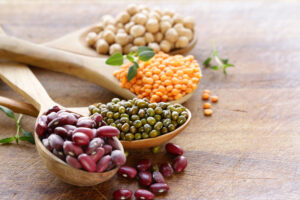
A diet consisting mainly of vegetables, whole grains, and legumes differs significantly from one based primarily on sweets, sugary drinks, white flour products, and highly processed meat substitutes.
Protein intake also deserves attention. Legumes, soy products, nuts, and whole grains can help meet protein needs. In a vegan diet, vitamin B12 must be reliably obtained through fortified foods or appropriate supplements. Depending on food choices, other nutrients such as iron, calcium, iodine, and omega-3 fatty acids may also require special attention. A simple example would be oatmeal with nuts for breakfast, a bean stew with whole-grain bread for lunch, and a vegetable stir-fry with tofu and brown rice for dinner.
What Does this Mean for Aging?
The study suggests that a high-quality, plant-based diet may be associated with more favorable aging markers. However, the quality of the food is crucial. The results do not prove that everyone must completely avoid animal products in order to age healthily.
4. The DASH Diet: Designed for Healthy Blood Pressure
DASH stands for “Dietary Approaches to Stop Hypertension.” The concept was specifically developed to counteract high blood pressure and support cardiovascular health. It is one of the most scientifically well-studied dietary patterns.
The DASH diet combines a high intake of plant-based foods with a careful selection of protein sources, dairy products, and fats. It is particularly important to limit sodium, which is primarily consumed through table salt.
The Basic Principles are:
- Plenty of vegetables and fruits.
- Whole grains instead of mostly refined grain products.
- Legumes, nuts, and seeds.
- Low-fat or reduced-fat dairy products, if they are part of the diet.
- Fish, poultry, and other suitable sources of protein.
- Less red and processed meat.
- Fewer high-sodium ready-made meals, processed meats, and highly processed snacks.
- Fewer sweets and sugary drinks.
DASH does not require any exotic foods. Rather, it focuses on regularly choosing affordable foods and avoiding unnecessary, frequent, and excessive salt intake. For example: Oatmeal with fruit for breakfast, a salad with chickpeas and whole-grain bread for lunch, and vegetables with fish or tofu and potatoes for dinner. Processed foods, salty snacks, and heavily salted deli meats become the exception rather than the rule.
Why is this Relevant to Aging?
High blood pressure puts strain on the blood vessels and is one of the major risk factors for cardiovascular disease. A diet that helps control blood pressure can therefore be an important part of preventive health care.

In the current study, the DASH diet was linked to molecular signaling pathways associated with heart health. This aligns with its original goal. However, it does not mean that the researchers have already proven through this study that the DASH diet prevents heart attacks or directly reduces biological age. People with high blood pressure should also not replace medically prescribed treatments with dietary changes on their own.
5. MIND Diet: Focusing on Brain Health
In addition to the well-known dietary patterns, the team also examined the MIND diet. Its name stands for “Mediterranean-DASH Intervention for Neurodegenerative Delay.” The concept combines elements of the Mediterranean diet with principles of the DASH diet and places special emphasis on foods that have been studied in relation to brain health. Among other things, it focuses on:
- Green leafy vegetables and other vegetables.
- Berries, especially varieties such as blueberries.
- Whole grains.
- Nuts and legumes.
- Fish and poultry.
- Olive oil as an important source of fat.
At the same time, the approach recommends limiting red meat, butter, cheese, sweets, and fried foods. The goal is not to ban individual foods outright, but to promote healthy habits in everyday life.
A MIND-inspired day might start with oatmeal and berries, include a salad with leafy greens and beans for lunch, and feature fish or a plant-based protein source with vegetables and whole grains for dinner.
What Did the Study Show?
The MIND diet was associated with changes in biological signaling pathways related to memory and cognitive function. This is an interesting finding because the diet is explicitly designed to promote brain health.
However, the results do not prove that a MIND diet prevents dementia. Rather, they provide a starting point for further research into how different dietary patterns are related to processes that are important for brain health.
What the Different Diets Have in Common
At first glance, these dietary approaches differ in their regional traditions and emphases. Upon closer inspection, however, there are many similarities.
Vegetables, fruits, whole grains, legumes, and nuts play an important role in several of the dietary patterns studied. In addition, highly processed foods, high-sugar products, and large amounts of red or processed meat are often limited. The Mediterranean and Nordic diets place different emphases on fats and typical foods, while the DASH diet focuses particularly on blood pressure control and the MIND diet emphasizes brain health.
The researchers also investigated which biological processes were associated with the dietary assessments. Although the individual dietary patterns were linked to different changes in DNA methylation sites, more than 70 percent of the assigned biological pathways overlapped.
These signaling pathways affect, among other things, cell structure, intercellular communication, and metabolism. All of these processes are important for normal cell function and also play a role in aging and chronic diseases.
The results therefore suggest that different paths to an overall high-quality diet may, in part, be linked to aging through similar biological processes. However, the study does not allow for a reliable determination of the specific contribution of individual foods or nutrients to this relationship.
Why the Results Were Particularly Striking Smong Smokers
Another observation surprised the researchers: the association between a healthier diet and more favorable markers of biological aging was stronger among smokers than among people who did not smoke.
One possible explanation is that the stress caused by smoking leaves more room for measurable differences. However, exactly how this correlation arises remains unclear.

Under no circumstances should this be interpreted to mean that the health consequences of smoking can be offset by a healthy diet. Smoking damages blood vessels and the respiratory tract, among other things, and increases the risk of numerous serious diseases. A balanced diet is beneficial, but it cannot counteract the effects of tobacco use. This observation primarily suggests that diet and other lifestyle factors should be considered together in future studies.
Does it Have to be a Specific Diet?
The results suggest otherwise. The researchers did not find a single dietary pattern that was clearly superior to all others. Furthermore, participants often met the criteria for different dietary patterns in varying ways.
This is an important insight for everyday life. Not everyone likes fish, not everyone wants to eat a vegetarian diet, and not everyone can or wants to regularly buy expensive specialty products. A healthy diet, therefore, does not have to look the same for everyone.
Those who enjoy Mediterranean cooking can incorporate vegetables, legumes, olive oil, and whole-grain products. Those who prefer regional foods will find many suitable alternatives in oats, rye, cabbage, root vegetables, and berries. Those who need to keep an eye on their blood pressure can follow the principles of the DASH diet. And those who want to focus particularly on brain health can incorporate elements of the MIND diet.
Even small changes can be a good place to start: choosing whole-grain bread over white bread more often, eating more legumes, adding an extra serving of vegetables a day, or cutting back on highly processed ready-made meals. The key is to make sure these changes fit into your daily routine long-term.
Healthy Aging Doesn’t Start With a Miracle Diet
The DZNE study provides further evidence that a high-quality diet is associated with slower biological aging. It is particularly interesting that different dietary patterns showed similar associations, even though they do not focus on the same foods.
Nevertheless, the results do not prove that diet alone slows aging or reliably prevents age-related diseases. Further studies are needed to assess long-term health consequences.
The practical message is clear nonetheless: there doesn’t have to be one “perfect” diet. A varied diet rich in plant-based foods, whole grains, legumes, and appropriate sources of protein and fat offers several ways to support long-term health. It is not a single ingredient that makes the difference, but rather the dietary pattern that becomes established in everyday life over the years.