



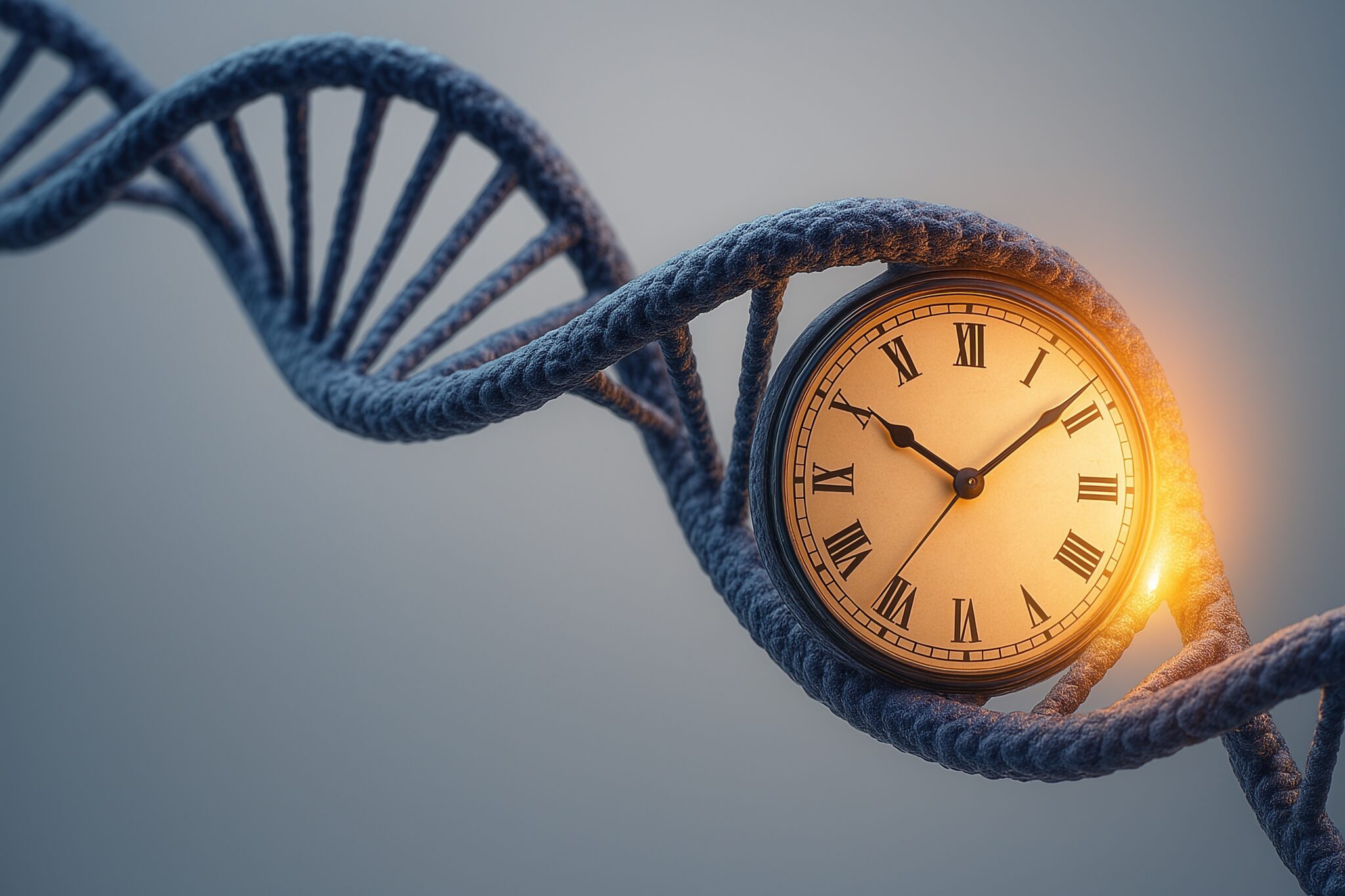
Aging cannot be reduced to a single mechanism. Throughout life, numerous biological systems change simultaneously. DNA is damaged and repaired, the immune system responds to changes, metabolism adapts, and various organs gradually lose some of their functionality. How these processes are interconnected is one of the central questions in modern gerontology.
Two research papers published in 2026 provide new insights into this—albeit from very different perspectives. The first comes from an international team led by researchers at the Hebrew University of Jerusalem and examines the role of the immune sensor cGAS in diseases caused by defects in DNA repair. The second study, by researchers at the University of Sydney, addresses the question of whether a biomarker-based estimate of biological age can be altered by a short-term change in diet. The studies do not share the same research objective and do not demonstrate a common mechanism. Rather, they shed light on two distinct aspects of biological aging: the body’s response to DNA damage and the question of how certain physiological markers of aging can be altered by diet.
When DNA Damage Triggers an Immune Response
Our genetic material is constantly exposed to various stresses. For this reason, cells possess a complex system for detecting and repairing DNA damage. In rare diseases such as ataxia-telangiectasia and Bloom syndrome, parts of these repair systems do not function properly. This can lead to genomic instability. Possible consequences include, among other things, changes in nerve cells, premature cellular aging, and impaired function of various tissues.
The new study from the Hebrew University of Jerusalem investigated whether damage to the genome alone is responsible for this development—or whether the immune system’s response also plays an important role. The focus is on cGAS. This molecule is part of the innate immune system. It recognizes DNA located in unusual places within a cell and can subsequently trigger an immune response via the cGAS-STING signaling pathway. This mechanism is normally beneficial. For example, if viral DNA is present in a cell, its detection can help initiate a defensive response. However, when DNA repair is impaired, the body’s own DNA can escape from the cell nucleus into the cell’s interior. To the sensor, it may then appear similar to foreign DNA. This results in a kind of biological false alarm.
A protective mechanism can become a problem
If cGAS is activated by such DNA fragments, inflammatory processes can be triggered even though no infection is present. This type of inflammation is referred to as sterile inflammation. The problem arises especially when this condition persists beyond the short term. A persistently activated immune response can itself become a burden on cells and tissues. The researchers therefore investigated the consequences of inactivating cGAS in models of DNA repair defects.
To do so, they used the short-lived turquoise killifish (Nothobranchius furzeri), a model organism employed in aging research. The researchers generated models of ataxia-telangiectasia and Bloom syndrome in this species.
In the ataxia-telangiectasia model, the genetic inactivation of cGAS led, among other things, to a reduction in certain disease traits. Improvements were observed in germline function, in markers of cellular aging in the liver, and in neuroinflammation in the cerebellum.
In addition, the researchers found evidence of improved genomic stability, including fewer micronuclei as well as improvements in certain characteristics of telomeres and heterochromatin.
cGAS May Do More Than Just Influence Inflammation
It is particularly interesting that the researchers do not view cGAS exclusively as a trigger of an immune response. Their findings suggest that the molecule may also be directly linked to mechanisms of genomic stability and DNA repair. This paints a more complex picture. In cases of severe DNA damage, DNA fragments can trigger an immune response. At the same time, under certain conditions, cGAS could also influence processes that are important for maintaining genomic stability.
The study therefore describes a context-dependent function of cGAS: In cells with certain DNA repair defects, the sensor can contribute to disease development, whereas under normal conditions, cGAS performs important functions.
This distinction is crucial. The results do not suggest that cGAS is fundamentally a harmful molecule or that suppressing this sensor as much as possible would slow aging in humans. On the contrary: The authors emphasize that a loss of cGAS in an otherwise healthy biological environment can negatively affect genomic stability and other traits.
Why the Findings Are Interesting for Future Therapies
Nevertheless, the study opens up a potential new direction for treating certain DNA repair disorders. Until now, it has been natural to view the underlying DNA damage itself as the main problem. The new findings suggest that the organism’s response to this damage could also be therapeutically relevant.
Instead of having to repair every single instance of DNA damage, it might be beneficial in certain diseases to specifically limit the resulting harmful immune activation. However, there is still a long way to go before such a treatment becomes a reality.
In particular, it must be taken into account that cGAS is part of the body’s normal immune defense. Excessive blockade could therefore impair the body’s ability to detect certain infections.
Furthermore, the results are primarily based on an animal model. Whether the observed effects can be extrapolated to humans with DNA repair defects must be clarified in further studies.
A Second Study Focuses on Diet and Biological Age
While cGAS research focuses on genetic damage and the immune system, a research team at the University of Sydney investigated a much more everyday influencing factor: diet. The study, published in the journal *Aging Cell*, analyzed data from 104 people aged 65 to 75. As part of a randomized dietary intervention, the participants were assigned to four different diets.

The study did not simply examine whether a particular diet is healthy or unhealthy. The researchers wanted to know whether differences in protein sources and the ratio of fat to carbohydrates could alter a specific biomarker-based measure of age.
The term “biological age” can quickly lead to misunderstandings. Chronological age is unambiguous: it corresponds to the number of years since birth. Biological age, on the other hand, is an estimate. It is intended to describe, based on various physical measurements, how a person’s physiological condition compares to their chronological age.
In the study, the researchers used the so-called Klemera-Doubal method (KDM) for this purpose. It combines several biomarkers into a statistical estimate. The metrics used included, among others, values related to metabolism, the cardiovascular system, and inflammation. The result is therefore not a direct “age gauge” nor proof that all aging processes in the body are proceeding faster or slower.
Four Diets Were Compared
The participants were assigned four different dietary regimens. The protein content was set at 14 percent of total energy intake in all groups. Two groups followed an omnivorous diet, with approximately half of the protein coming from animal sources. The other two groups followed a semi-vegetarian diet, in which 70 percent of the protein came from plant sources. Additionally, a distinction was made between a higher-fat, lower-carbohydrate diet and a lower-fat, higher-carbohydrate diet.
This resulted in four groups:
- omnivorous (both plant-based and animal-based foods) and high-fat
- omnivorous and high-carbohydrate
- semi-vegetarian and high-fat
- semi-vegetarian and high-carbohydrate
The diet was followed over a period of four weeks; the foods used were provided to the participants as part of the controlled intervention.
After four Weeks, Measurable Changes Were Observed
The most interesting observation was that the KDM-based age score changed in several groups. The group following an omnivorous and high-fat diet showed no significant change from the baseline value. This diet was also the most similar to the diet the participants were accustomed to before the intervention began.
In comparison, the omnivorous, higher-carbohydrate group showed a statistically significant reduction in the KDM-based age difference. The two semi-vegetarian groups also showed corresponding changes compared to the high-fat omnivorous group, although not all results were statistically significant.
The higher-carbohydrate diet consisted of 14 percent of energy from protein, 28 to 29 percent from fat, and 53 percent from carbohydrates. The study thus demonstrated that a biomarker-based age measure in older adults can respond measurably after just a four-week dietary change.
This Does Not Mean that People Become Younger in Four Weeks
Here lies the study’s most important limitation. The researchers themselves caution against equating the observed change with an actual reversal of the aging process. One reason for this is that the biomarkers used are not influenced solely by the long-term aging process; they also respond to current physiological changes.
For example, if metabolic or inflammatory markers change within a short period of time, this can also alter a composite age score. This may be biologically relevant—but it does not necessarily mean that the long-term rate of aging has changed. The authors therefore choose their words carefully: The four-week intervention shows that the KDM-based age score responds to dietary changes. Whether this actually results in a long-term change in aging processes remains to be seen.
What Both Studies on Aging Reveal
The two research studies examine different levels of biology. The cGAS study focuses on genetic instability, DNA repair, and immune responses. The dietary study, on the other hand, examines changes in a complex physiological biomarker profile. Nevertheless, an interesting common perspective emerges. Agingis not a static process.
The body continuously responds to damage, nutrients, metabolic changes, and other stresses. Some of these responses can apparently change relatively quickly, while others reflect long-term biological processes. In the case of DNA repair defects, the immune response to damaged DNA may potentially exacerbate the situation. In the case of nutrition, certain physiological markers can change within a few weeks. However, this does not mean that nutrition and cGAS are linked by a common mechanism. The two studies provide no evidence for this.
Inflammation as a Possible Common Factor
Nevertheless, there is an interesting overlap when it comes to inflammation. In cGAS research, misdirected activation of the innate immune system plays a central role. The inflammatory processes triggered by this can contribute to disease severity in the DNA repair disorders studied.

The dietary study also takes inflammatory markers into account within its biomarker-based aging model. However, the KDM value reflects several physiological domains and is not simply a measure of inflammation alone. Therefore, no direct link between the two studies can be inferred from this. The results do, however, highlight why inflammatory processes play an important role in aging research: they are part of a larger network involving immune function, metabolism, cellular damage, and tissue homeostasis.
Particularly in research on biological aging, it is important to distinguish between an interesting research finding and a clinically proven effect. In the case of the cGAS study, it remains to be seen whether the improvements observed in the animal model can be transferred to humans. It must also be investigated whether the signaling pathway can be safely influenced without impairing normal immune defense.
Regarding the dietary study, the main question concerns its long-term significance. The intervention lasted only four weeks. It is therefore unknown whether the changes in the KDM-based age score will persist over a longer period. Likewise, it has not been demonstrated that participants will develop fewer age-related diseases or live longer as a result. Further studies with longer observation periods are needed to determine whether the short-term changes are indeed associated with long-term health benefits.
A Cautious Look at the Topic of “Rejuvenation”
The term “rejuvenation” is particularly problematic in aging research because it can mean very different things. A change in a biomarker is not the same as restoring the biological function of an organ. An improvement in disease markers in an animal model is not the same as a proven therapy in humans. And a lower calculated age after a dietary change does not automatically mean that the entire aging process has been reversed.
Rather, the two studies reveal something more subtle and scientifically interesting: certain processes associated with aging and tissue damage can apparently be influenced. In one study, this is achieved by modifying an immune signaling pathway in a model of DNA repair defects. In the other, it is achieved through a controlled change in diet and the subsequent measurement of physiological biomarkers. Whether such changes lead to more healthy years of life in the long term is another question—and it is precisely this question that further research must answer.
What This Research Means for the Future
Modern aging research is increasingly moving away from the notion that aging is merely an inevitable process in which damage continues to accumulate. Instead, researchers are investigating how different biological systems interact with one another and which processes might be modifiable.
The cGAS research shows that, under certain pathological conditions, the body’s response to DNA damage can itself contribute to degeneration. The dietary study shows that certain physiological markers of aging in older adults can change even over a short period of time.
Both findings are interesting, but both have clear limitations. Neither study provides a simple formula for combating aging. However, they do demonstrate how complex the underlying biological processes are. The real challenge now is to determine which short-term biological changes are relevant in the long term. After all, healthy aging is not ultimately about making a single lab value appear as low as possible. What matters is whether tissues remain functional for longer, diseases occur later, and people can spend more years in good physical and mental health. This is precisely where the next step in research lies.