



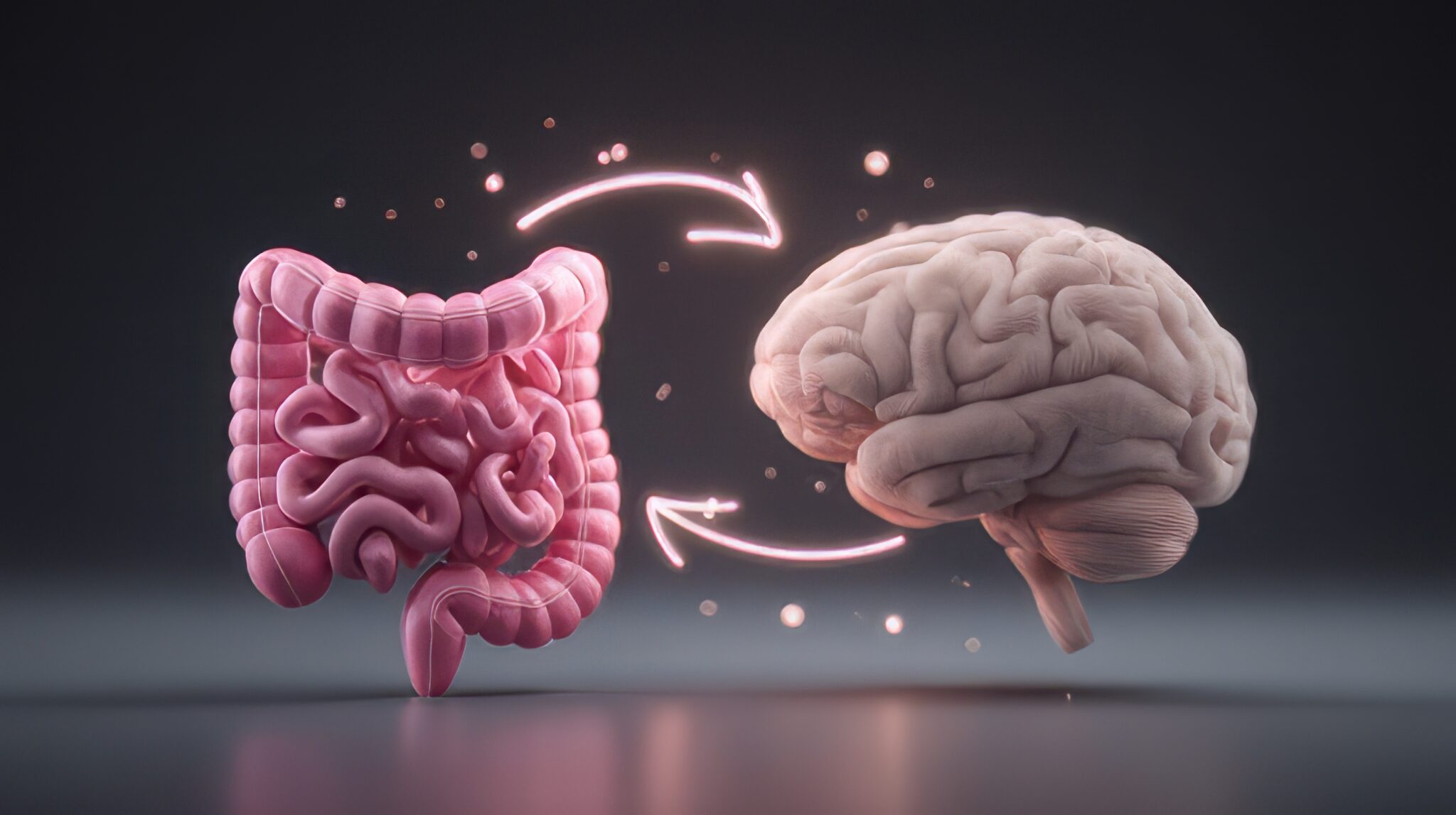
Our gut is responsible for more than just digestion. Billions of bacteria there constantly produce metabolic byproducts that enter the bloodstream and can affect other organs. One of these molecules is now the focus of Alzheimer’s research. Scientists have found evidence that imidazole propionate—ImP for short—is linked to changes that play a role in Alzheimer’s and other forms of neurodegenerative diseases. What’s particularly interesting is that this substance is produced by gut bacteria.
The new study thus points to a possible biological link between the gut microbiome and changes in the brain. However, it does not yet provide proof that ImP causes Alzheimer’s in humans.
What is Imidazole Propionate?
Imidazole propionate is a metabolite that can be produced by certain gut bacteria. It is produced during the bacterial breakdown of the amino acid histidine. The amount of ImP a person produces can apparently vary considerably. This depends, among other things, on which bacteria are present in the gut and how active the relevant metabolic pathways are.

Interestingly, ImP does not necessarily remain in the gut. The substance can enter the bloodstream and thus, in principle, also reach tissues outside the digestive tract. Previous studies had already linked elevated ImP levels to various metabolic and vascular diseases. The new study now investigates whether ImP could also be relevant to brain health.
Higher ImP Levels Were Associated With Poorer Cognitive Performance
For their study, the researchers analyzed blood samples from 1,196 cognitively normal adults. The participants came from sources including the Wisconsin Alzheimer’s Disease Research Center cohort and the Wisconsin Registry for Alzheimer’s Prevention. The study revealed a striking association: people with higher ImP concentrations in their blood performed worse on certain cognitive tests.
The findings became even more interesting when examining changes over time. Individuals with particularly high ImP levels showed a more unfavorable decline in certain cognitive functions. Several biomarkers associated with Alzheimer’s disease and neurodegenerative processes were also linked to higher ImP levels.
However, this does not automatically mean that ImP is the cause of cognitive decline. People with higher ImP levels may also differ in other health characteristics. This is precisely why the researchers conducted additional genetic and experimental studies.
Alzheimer’s Biomarkers Were also Altered
When analyzing blood markers, the researchers found, among other things, a link between higher ImP levels and phosphorylated tau, particularly pTau-217. Tau is a protein that is important for the stability of nerve cells. In Alzheimer’s disease, tau undergoes changes—including increased phosphorylation—and can subsequently accumulate in pathological structures in the brain.
Neurofilament Light Chain (NfL), a marker of nerve cell damage, also showed associations with ImP. Thus, the observations extended beyond memory and cognitive function to include biological changes associated with neurodegeneration.
A Link to Alzheimer’s Risk Was also Investigated Genetically
Another part of the study is particularly interesting. The researchers identified a genetic variant on chromosome 12 that was associated with ImP concentrations in the blood. The same region of the genome is also linked to Alzheimer’s risk.
Using genetic analysis, the scientists investigated whether this provided evidence of a possible causal link between elevated ImP levels and Alzheimer’s disease.
The results suggest that higher ImP levels could indeed contribute to the biology of Alzheimer’s risk. Nevertheless, this does not constitute definitive proof of a direct cause-and-effect relationship in humans.
What Might Be Happening in the Brain
The researchers then wanted to know whether ImP is not only associated with Alzheimer’s markers but might also directly influence biological processes. To this end, they conducted various experiments using cells and animal models. These experiments showed that ImP can, among other things, impair the function of the blood-brain barrier. This natural protective barrier controls which substances pass from the blood into the sensitive nervous tissue.
A compromised blood-brain barrier has long been associated with neurodegenerative diseases. The experiments also provided evidence that ImP can promote tau phosphorylation in nerve cells. This effect could be blocked in the experiments by inhibiting a specific enzyme, glycogen synthase kinase 3β.
ImP Exacerbated Alzheimer’s-Like Changes in Mice
Perhaps the strongest evidence of a potential biological effect came from animal studies. The researchers administered ImP to Alzheimer’s mouse models over an extended period. In these animals, certain Alzheimer’s-like changes became more pronounced.
Thus, the animal experiments complement the observations in humans: The human study shows associations between ImP and Alzheimer’s-related characteristics, while the experiments provide evidence that elevated ImP levels can indeed influence biological processes. Nevertheless, an important caveat applies here as well: Results from mouse models cannot automatically be extrapolated to humans.
Why the Gut is of Particular Interest
Research on the gut microbiome has changed significantly in recent years. In the past, studies primarily focused on identifying which bacteria are present in the gut. Today, scientists are increasingly interested in what these bacteria produce. This is because two people can have a partially similar microbiome composition yet still produce different amounts of certain metabolites.
This is precisely where so-called microbial metabolites come into play. These are metabolic products produced by gut bacteria that can subsequently be transported throughout the body. In the case of ImP, this raises the question of whether the substance produced in the gut can also influence processes outside the digestive tract. The current findings provide initial evidence for this, including with regard to the blood-brain barrier and certain processes in nerve cells. However, it has not yet been conclusively determined whether ImP actually contributes to the development or progression of Alzheimer’s disease in humans.
Not Every Gut Bacterium is Automatically “Good” or “Bad”
The gut microbiome cannot simply be divided into beneficial and harmful bacteria. A single bacterium can produce different metabolic byproducts depending on its environment and the available nutrients. For this reason, researchers are increasingly examining not only the composition of the microbiome but also the molecules produced by gut bacteria. In the case of imidazole propionate, the focus is particularly on which microorganisms possess the necessary metabolic pathways and under what conditions they produce the compound.
There are also significant differences in the gut microbiome among individuals . Diet, age, medications, and other factors can influence which bacteria are present and how active they are. As a result, the amounts of certain bacterial metabolites can also vary. This opens up a new perspective for Alzheimer’s research: It may be that what matters is not only which bacteria live in the gut, but also what chemical signals they send to the rest of the body.
Could ImP be Specifically Reduced at Some Point?
It is precisely this question that makes the research particularly interesting. If further studies confirm that high ImP levels do indeed contribute to the development of Alzheimer’s, the molecule could potentially become a new therapeutic target.
In the long term, various strategies are conceivable: modifying certain microbial metabolic pathways, drugs that influence the formation or effect of ImP, or possibly other methods that can alter the concentration of the substance in the blood. However, research is still a long way from achieving this.
The current study provides a potential starting point. It does not show that a specific diet, a probiotic, or any other readily available measure can reliably lower ImP levels and thereby prevent Alzheimer’s disease.
What Does the Study Mean for Nutrition?
At this time, no specific “Alzheimer’s diet” can be derived from the results. This is important because research on the gut microbiome quickly raises the question of which foods might promote or reduce certain bacteria. However, the current study does not answer this question. It primarily examines the potential biological significance of imidazole propionate and its association with changes relevant to Alzheimer’s disease.

In general, diet can influence the gut microbiome and, consequently, the metabolic activity of gut bacteria. However, the effects of individual foods or dietary patterns on ImP production have not yet been sufficiently clarified. Likewise, it cannot be concluded from the study that certain foods should be avoided to prevent Alzheimer’s disease.
Therefore, the prospects for future research are particularly interesting. If it is confirmed that microbial metabolites such as ImP are indeed involved in the development of neurodegenerative changes, diet could potentially play an indirect role—for example, by influencing the composition and activity of the gut microbiome. Until then, however, one should be cautious about making specific dietary recommendations. Such conclusions would require long-term, controlled studies in humans.
A New Perspective on Alzheimer’s
For decades, Alzheimer’s research has focused heavily on processes occurring directly in the brain—such as the deposition of amyloid-β and changes in the tau protein. The new study broadens this perspective. It suggests that metabolites produced by gut bacteria may also be involved in processes that begin years before noticeable symptoms appear.
This does not mean that the gut suddenly becomes the sole cause of Alzheimer’s. Rather, it could be part of a much larger system in which genetic factors, age, metabolism, vascular health, immune processes, and the microbiome are all interconnected.
The crucial question is therefore no longer just: Which bacteria live in the gut of a person with Alzheimer’s? Rather, it is increasingly: What substances do these bacteria produce—and what effects do these substances have on the body? Imidazole propionate could be an example of such a signaling molecule.
Current research provides several pieces of evidence that fit together: higher ImP levels in humans were associated with less favorable cognitive and biological markers; genetic analyses suggest a possible causal role; and experiments on cells and mice demonstrate specific biological effects. Whether this will eventually lead to a new approach for the prevention or treatment of Alzheimer’s remains to be seen in further studies.
Conclusion
A substance produced by gut bacteria is increasingly becoming the focus of Alzheimer’s research. Imidazole propionate is associated with cognitive performance and various Alzheimer’s-related biomarkers. Experiments also suggest that the substance may influence processes relevant to the function of the blood-brain barrier and tau abnormalities in the brain.
However, no new therapy or specific recommendation for the general population can be derived from this yet. The results must be confirmed by further studies and investigated more closely, particularly in humans.
The study does, however, show how our understanding of Alzheimer’s is evolving: It is not only processes within the brain itself that may play a role. Metabolites produced in the gut may also be involved in the biological processes associated with the disease. This brings an exciting question more into the spotlight of research: What role do the metabolites of our gut microbiome play in brain health?