



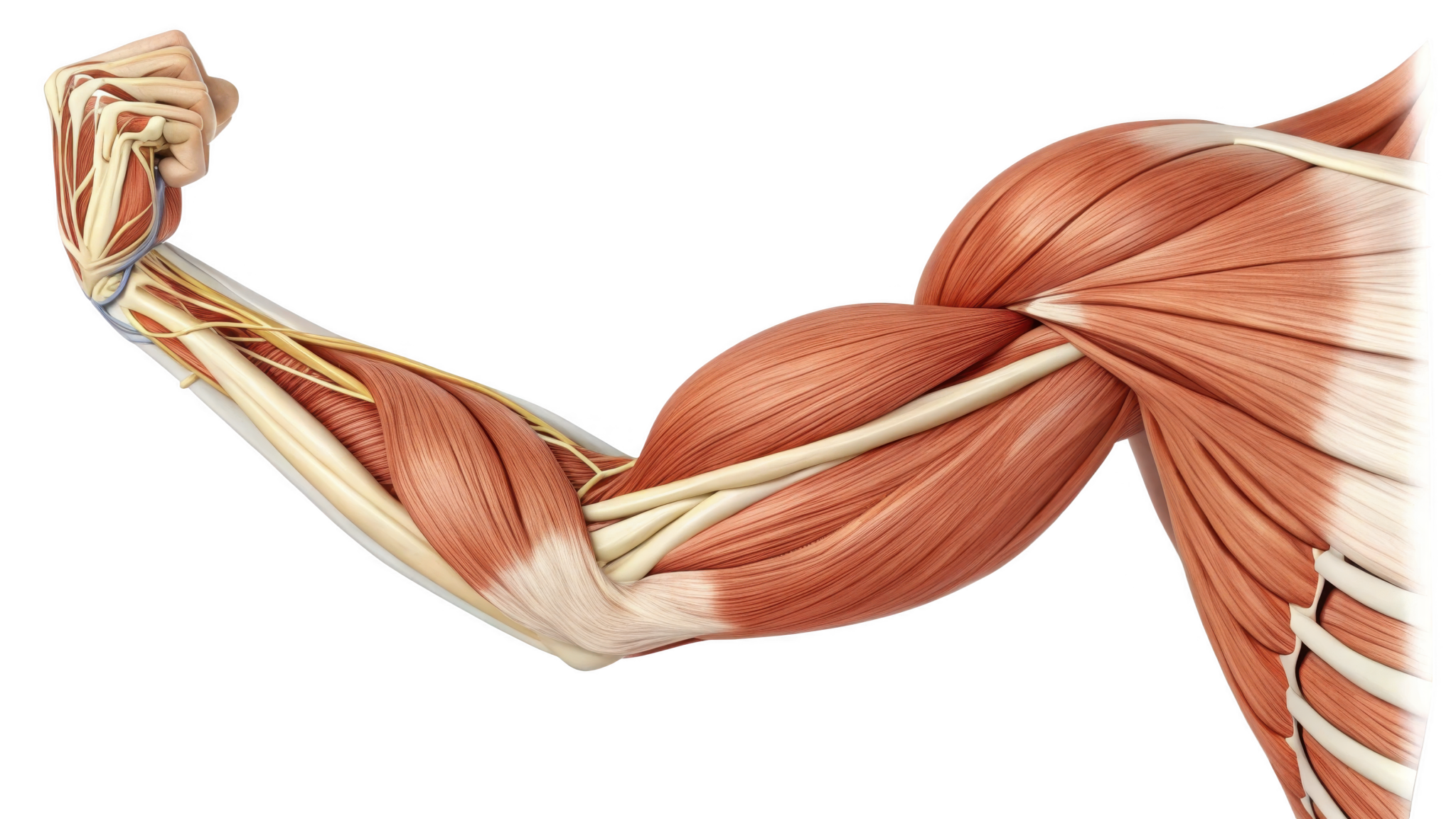
As we age, our muscles change. Muscle mass often decreases, physical performance declines, and the body’s ability to repair damaged muscle tissue can also deteriorate. What initially appears to be a normal part of the aging process has far-reaching consequences for health: strength, mobility, and independence can all be affected.
Japanese scientists have now investigated a mechanism that has received little attention to date but could play an important role in muscle regeneration. The focus is on a protein produced naturally by the body, whose function can be impaired by certain chemical changes. In the studies, a sulfur-containing compound exhibited surprising properties and was able to significantly improve this protein’s binding capacity. In the long term, the results could open up new avenues for research into age-related muscle changes. However, this is still basic research. Further studies are needed to determine whether new treatment options for older adults can actually be developed from these findings.
Why Muscles Lose Their Ability to Repair Themselves as We Age
Our muscles are an extremely adaptable tissue. Every day, they enable us to walk, stand, grasp, carry objects, and perform numerous other movements. Even during everyday activities, minor stress-related damage occurs in the muscle fibers, which the body can normally repair on its own. To do this, the body has a sophisticated repair system. So-called satellite cells play a central role. These special stem cells are located directly adjacent to the muscle fibers and normally remain in a largely dormant state.

When muscle tissue is damaged or subjected to physical stress, these cells can be activated. They begin to divide and develop into muscle cells that participate in the repair and regeneration of muscle fibers. This process is crucial for the long-term maintenance of muscle health. However, the activity of satellite cells changes over the course of a person’s life. In older adults, their activation may be less efficient. This makes it more difficult for the body to regenerate damaged muscle fibers and maintain existing muscle structure. Scientists are therefore intensively investigating which biological signals determine whether muscle stem cells are sufficiently activated.
An Important Protein Triggers Muscle Repair
The so-called hepatocyte growth factor, or HGF for short, plays a crucial role in this process . This protein is involved in various biological processes and is also particularly important for the regeneration of skeletal muscle. HGF can bind to a specific receptor called c-Met. This binding triggers a signaling cascade within the cell that, among other things, influences the activation and behavior of muscle stem cells.
Simply put, HGF functions like a biological messenger that signals to muscle cells that repair processes are needed. For this communication to work, however, the protein must have a specific spatial structure. Only when its binding sites are properly formed can it interact effectively with the corresponding receptor. This is precisely where the Japanese research comes in.
Chemical Changes Could Impair the Effect of HGF
The research team at Kyushu University in Japan investigated how certain chemical changes affect the functionality of the HGF protein. The scientists paid particular attention to a process called protein nitration, in which certain amino acid residues within a protein undergo chemical modification. Such a modification can alter a protein’s properties and, under certain circumstances, prevent it from optimally fulfilling its original biological function. In the context of HGF, the researchers identified two particularly important sites where such a modification can be problematic. If these areas are nitrated, the protein’s ability to bind to the c-Met receptor may be impaired. This may also hinder the transmission of the signals required for the activation of muscle stem cells. This observation is scientifically interesting because it sheds light on an additional mechanism of muscle aging.
Until now, research into age-related muscle changes has often focused on whether the body produces fewer regenerative factors or whether the stem cells themselves lose their functionality. The new study suggests that chemical modifications of existing signaling proteins may also play a role. Accordingly, it is not just a matter of how much HGF is present in muscle tissue, but also of how effectively the protein can actually perform its function.
The possibility that this mechanism might indeed be linked to age-related changes in muscle tissue was already explored in an earlier study from 2023. In that study, the scientists also examined the so-called nitration of the HGF protein and its effects on its biological function. Their findings suggested that this chemical modification may impair HGF’s ability to bind to the c-Met receptor. This led to a closer examination of a possible link between the chemical modification of the repair protein and reduced muscle regeneration in old age.
Two Sulfur-Containing Compounds are Being Studied in Greater Detail
In the next step, the scientists sought ways to limit the undesirable modification of the HGF protein. To this end, they investigated two sulfur-containing substances: glutathione trisulfide (GSSSG) and lipoic acid trisulfide (LASSS). Both compounds belong to a group of chemical substances that are of interest for various biological reactions due to their unique sulfur structure. They may be involved in oxidative and other chemical processes that influence the properties of proteins.
Laboratory experiments showed that both substances were able to reduce the nitration of the HGF protein. This was an important initial indication that the chemical stability of the protein could potentially be influenced. However, further investigations revealed a crucial difference between the two compounds. While both substances offered some protection against the undesirable chemical modification, only lipoic acid trisulfide was able to bring about a particularly pronounced improvement in receptor binding. The researchers therefore hypothesized that LASSS does not act solely as a protective agent but may also directly influence the properties of the HGF protein.
Another research approach was already explored in a study conducted in 2024. In that study, a team of scientists investigated whether the undesirable nitration of the HGF protein could be prevented or limited using special antibodies. The investigations pointed to a possible way to protect this important repair protein from losing its function. While this approach focused on antibodies, the current research examined the effects of sulfur-containing compounds. Both lines of research thus pursue a similar goal: to preserve the biological function of HGF for as long as possible and to better harness its importance for muscle regeneration.
“Super HGF”: When a Protein Binds Better to Its Receptor
In the recent 2026 study, further laboratory analyses revealed a particularly remarkable result: After treatment with lipoic acid trisulfide, HGF bound to the c-Met receptor more than twice as strongly as the control variant. The scientists referred to this improved form of the protein as “Super HGF.” Behind this designation lies a change in the protein’s molecular properties. Apparently, LASSS influences the spatial structure of HGF in a way that enhances its interaction with the receptor.
Proteins are not rigid structures. Their function depends crucially on how their individual components are arranged in three-dimensional space. Even relatively small structural changes can determine whether a protein interacts particularly well, less well, or not at all with another molecule. In this case, treatment with LASSS appears to favor a configuration that enables a stronger binding to c-Met.
This could be significant for muscle regeneration, because HGF can transmit important signals to muscle cells via this receptor. However, stronger receptor binding does not automatically mean that overall muscle regeneration is improved accordingly. Whether and to what extent this actually results in functional benefits must be clarified through further biological studies.
Why Not Every Sulfur-Containing Compound Acts the Same Way
Another interesting aspect of the study is the difference between the two substances examined. Both glutathione trisulfide and lipoic acid trisulfide were able to reduce unwanted nitration. Nevertheless, only LASSS led to a particularly marked improvement in HGF’s binding capacity. This suggests that the effect is not based solely on the substances’ antioxidant properties. Rather, lipoic acid trisulfide may interact with the protein in an additional way that alters its structure and, consequently, its binding properties.
This distinction is important: A substance can protect a protein from certain types of damage without simultaneously enhancing its original function. In the case of LASSS, however, both effects appear to occur simultaneously. This raises an interesting question for further research: Is it possible to specifically modulate certain endogenous signaling proteins so that they can perform their functions more effectively even under unfavorable biological conditions?
Studies in Mice Provide Further Evidence
Following the initial laboratory results, the scientists wanted to verify whether the observed effects could also be demonstrated in living tissue. To this end, they conducted studies on mice. By temporarily suspending the mice by their tails, they reduced the normal mechanical load on the musculature. This experimental method is used in research to investigate changes that can occur during prolonged physical inactivity. The results showed that treatment with LASSS was associated with lower nitration of the HGF protein in muscle tissue.
This allowed the scientists to confirm an important part of their previous observations under biological conditions as well. The results suggest that lipoic acid trisulfide can interact with HGF not only in a controlled laboratory environment but may also influence its chemical properties within a living organism. However, an important caveat must be noted: The investigation of protein changes is not synonymous with evidence of improved muscle strength or increased muscle volume. The results point to a potential protective mechanism at the molecular level. Whether this actually leads to improved physical performance or accelerated muscle recovery is another question that still needs to be investigated.
What the Results Could Mean for Aging Research
The loss of muscle mass and muscle strength is one of the major health challenges facing an aging society. Of particular relevance here is a condition known as sarcopenia. This term refers to a progressive loss of muscle mass and muscle strength that can occur primarily in older age. The consequences can be significant. Those affected often have greater difficulty walking, standing up, or climbing stairs. The risk of falls and physical limitations can also increase. The causes are complex. In addition to changes in hormone balance, reduced physical activity, and altered protein utilization, inflammatory processes and changes in muscle stem cells also play a role.

The new Japanese research adds another possible factor to this picture: the chemical modification of proteins that are important for muscle regeneration. If this mechanism is confirmed in further studies, it could provide new avenues for the development of regenerative therapies in the long term. For example, it might be possible to specifically stabilize certain signaling proteins or enhance their interaction with the corresponding receptors. This would be particularly beneficial for people whose muscle regeneration is impaired by aging or prolonged periods of physical inactivity.
No Treatment for Muscle Wasting Yet
Despite the promising results, it is currently too early to consider lipoic acid trisulfide as a treatment for age-related muscle loss. The studies described so far primarily provide insights into molecular processes. They do not yet prove that treatment with LASSS in humans preserves muscle mass, increases muscle strength, or prevents age-related mobility limitations.
Further studies are needed for this. First, it must be clarified in greater detail how the substance works in the body, what dosages might be safe and effective, and whether the observed changes actually lead to improved muscle regeneration. Potential side effects and long-term effects must also be investigated before medical use can be considered. Therefore, these results do not support the independent use or administration of the substance under investigation.
A New Perspective on the Biological Aging of Muscle Tissue
The Japanese study shows that the regenerative capacity of our muscles depends on numerous interrelated factors. In addition to the number and activity of muscle stem cells, another crucial factor may be whether key signaling proteins can reliably perform their biological functions. Of particular significance is the observation that lipoic acid trisulfide was able to achieve two effects simultaneously : it reduced the undesirable chemical modification of HGF and, at the same time, improved its binding to the c-Met receptor.
This study thus opens up a new research approach: Instead of focusing exclusively on the muscle cells themselves, future research could also examine the molecular signals that control their regeneration. It remains to be seen whether this discovery will one day lead to new treatment options for age-related muscle loss. However, the results provide an interesting indication that the muscles’ natural repair mechanisms may be more precisely influenced than previously assumed.