



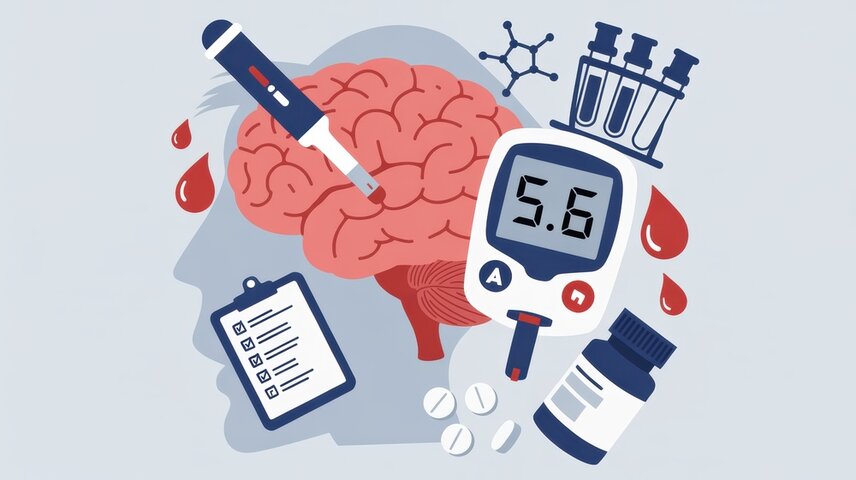
Diabetes and dementia appear to be closely linked, with each condition potentially influencing the other. Disruptions in insulin and glucose metabolism can impair the brain’s energy supply, exacerbate inflammation, and damage blood vessels—all of which have been linked to memory loss. Researchers have also found that some common diabetes medications may reduce the risk of dementia. These findings open up new possibilities for protecting brain health as we age.
Diabetes Is Associated with an Increased Risk of Dementia
According to some studies, people with diabetes have a significantly increased risk of developing dementia later in life. Estimates suggest this risk is about 60% higher than in people without diabetes. Particularly problematic are severe blood sugar fluctuations and recurrent episodes of hypoglycemia, which are also linked to an increased risk of cognitive decline. In addition, the duration of the disease plays an important role: the longer poorly controlled diabetes persists, the greater the risk of long-term damage to the brain. Even early metabolic disorders that have not yet been diagnosed as diabetes (prediabetes) may already be associated with changes in the brain.

In the long term, several factors interact in this process. Persistently elevated blood sugar levels can damage the small blood vessels that supply the brain. This impairs what is known as microcirculation—that is, blood flow at the microscopic level. At the same time, high blood sugar levels promote oxidative processes in which so-called free radicals can damage cells and DNA.
So-called “low-grade inflammation,” which is common in diabetes, is also associated with neurodegenerative changes. These chronic inflammatory processes often go unnoticed but can put strain on nerve cells over the course of years and impair their function. Furthermore, there is ongoing discussion that diabetes may weaken the blood-brain barrier, allowing harmful substances to enter the brain more easily and potentially cause further damage there.
Insulin resistance Also Affects the Brain
The primary cause of type 2 diabetes is insulin resistance. In this condition, the body’s cells no longer respond properly to insulin, causing glucose to remain in the blood. What was long considered a problem limited to the liver, muscles, and fat tissue also affects the brain. There, insulin is important for memory, learning, and communication between nerve cells. If this signaling process is disrupted, the energy supply to brain cells can suffer.
In the brain, insulin also affects synaptic plasticity—that is, the brain’s ability to change and form new connections. Impaired insulin signaling could therefore affect not only energy supply but also learning and adaptation processes. The hippocampus, a key region for memory, is particularly sensitive to such changes.
Energy Deficiency in the Brain in Dementia
The brain consumes about 20% of the body’s total energy, even though it accounts for only about 2% of body weight. In dementia, the ability of nerve cells to use glucose efficiently appears to decline. Combined with insulin resistance, this leads to an energy deficit in the brain, which can contribute to a decline in cognitive function. Some researchers therefore unofficially refer to this pattern as “Type 3 diabetes.”
This is not just a matter of the sheer availability of glucose in the blood, but primarily of its uptake and utilization within the nerve cells themselves. Studies suggest that certain glucose transporters in the brain may be less active, further limiting the energy supply. Mitochondrial dysfunction—that is, disturbances in the cells’ “powerhouses”—is also discussed as a possible contributing factor.
Furthermore, the energy deficit is not evenly distributed. Certain regions, such as the prefrontal cortex or the hippocampus, are more severely affected, which could explain why memory, orientation, and decision-making ability are impaired early on. Furthermore, these brain areas are particularly sensitive to stress, inflammation, and oxygen deprivation, which can further exacerbate the dysfunction.
Alzheimer’s Can Affect Metabolic Processes
It is not only diabetes that increases the risk of dementia—Alzheimer’s also appears to influence glucose metabolism in turn. Studies show that people with Alzheimer’s often have elevated blood sugar levels, even without a diagnosis of diabetes. Genetic factors such as the APOE4 variant are also associated with reduced insulin sensitivity in the body.

Furthermore, there is evidence that even early Alzheimer’s changes in the brain can affect energy metabolism. Brain regions involved in regulating hunger, energy, and hormone balance are particularly affected. This can lead to disrupted communication between the brain and the body, which further destabilizes metabolism.
One possible mechanism is the disruption of central regulatory circuits in the brain that control energy balance. When these systems are impaired, this can increase stress hormones such as cortisol, which in turn raises blood sugar levels. This creates a biological feedback loop between the brain and metabolism. In addition, it is theorized that inflammatory processes in the brain itself may send signals to the body that further impair glucose metabolism.
Vascular Damage as a Link
A key mechanism linking the two conditions is vascular damage. Over the long term, diabetes damages blood vessels throughout the body—including in the brain. This impairs blood flow, and nerve cells receive a reduced supply of oxygen. At the same time, inflammation can develop and the blood-brain barrier can be weakened, which promotes further damage.
In addition, so-called microinfarcts can occur—tiny disruptions in blood flow that often go unnoticed. Over the years, these small instances of damage accumulate and can significantly impair cognitive function. This effect is particularly pronounced when combined with high blood pressure.
Memantine and the Interdisciplinary Perspective
Memantine is an example of the close connection between metabolic and brain research. This medication is used today to treat Alzheimer’s disease, but it was originally studied in the context of diabetes research. Although it did not affect blood sugar levels, it later demonstrated positive effects on brain function. This illustrates just how closely these two fields of research are linked.
The history of memantine also shows that active ingredients can often influence multiple biological systems. What is initially considered a “failure” in one area can become therapeutically relevant in another—an important reason why interdisciplinary research is becoming increasingly important today.
Metformin and Potential Protective Effects
Metformin is the most commonly used diabetes medication; it not only lowers blood sugar but also has anti-inflammatory effects. It can cross the blood-brain barrier and may exert protective effects in the brain. Some studies suggest that people taking metformin are less likely to develop dementia, although the evidence is not yet conclusive.
In addition, metformin may also influence cellular aging processes, including through the activation of AMPK, a key energy sensor in the cell. This could indirectly improve the resilience of nerve cells to stress.
Weight-loss injections May Reduce Plaque Formation
GLP-1 receptor agonists such as semaglutide (Ozempic, Wegovy) are primarily used to treat type 2 diabetes and for weight loss. They lower blood sugar, promote a greater sense of fullness, and thus also support weight loss. Observational data show that people with diabetes who take these medications may have a lower risk of dementia. Compared to metformin, some studies suggest that GLP-1 receptor agonists may even be associated with a greater reduction in risk.

It is theorized that these medications not only improve metabolism but also influence inflammatory processes in the body and possibly in the brain. Since inflammation and insulin resistance are considered key factors in Alzheimer’s disease, these active ingredients are increasingly becoming the focus of research. Two large clinical trials, Evoke and Evoke Plus, are currently investigating the effects of oral semaglutide in people with mild cognitive impairment or early-stage Alzheimer’s disease. The goal is to determine whether this treatment can slow the progression of the disease or stabilize cognitive function.
Insulin Therapy and Its Direct Effect on the Brain
Since insulin also plays an important role in the brain, new therapeutic approaches are being explored that deliver the hormone directly to the central nervous system. Insulin nasal sprays, in particular, are the focus of attention. Initial small-scale studies show evidence of improved memory function and a possible slowing of brain degeneration processes; however, the data are not yet sufficiently robust.
The challenge lies in delivering insulin specifically to the brain without causing side effects in the rest of the body. At the same time, it remains unclear which patient groups might benefit the most—such as people in the early stages of cognitive impairment.
SGLT2 Inhibitors and the Risk of Dementia
SGLT2 inhibitors are a newer class of diabetes medications that lower blood sugar by excreting glucose through the urine. Recent studies suggest that they may be associated with a lower risk of dementia than other therapies.
In addition to lowering blood sugar, several other mechanisms may play a role: These include improved vascular function, a slight reduction in blood pressure, and potential effects on inflammatory processes and oxidative stress. Since these very factors are closely linked to the development of Alzheimer’s disease and vascular dementia, SGLT2 inhibitors are considered particularly interesting for research.
Another line of research is investigating whether these medications make energy metabolism in cells more efficient and thereby indirectly reduce the burden on the brain. However, it has not yet been conclusively determined whether the observed potential protective effect is actually directly attributable to the medication or results from improved metabolic control.