




As people age, many notice a familiar change: their waist circumference gradually increases, even if their overall body weight doesn’t change significantly. This increase in belly fat is more than just a cosmetic issue. Excess abdominal fat is linked to a slowed metabolism, accelerated aging, type 2 diabetes, heart disease, and other chronic health problems. Scientists have long known that body composition changes with age, but why fat accumulates specifically in the abdominal area has remained unclear until now. Now, researchers at City of Hope have identified a possible key biological mechanism underlying age-related abdominal fat. Their findings, published in the journal *Science*, point to a newly identified type of stem cell that emerges during the aging process and may stimulate the production of new fat cells. The discovery could ultimately lead to new strategies for reducing abdominal fat and promoting healthier aging.
Looking Beyond Enlarged Fat Cells
“As people age, they often lose muscle mass and gain body fat—even if their body weight remains the same,” said Dr. Qiong (Annabel) Wang, co-author of the study and associate professor of molecular and cellular endocrinology at the Arthur Riggs Diabetes & Metabolism Research Institute at City of Hope, a leading center for diabetes research. “We discovered that aging triggers the emergence of a new type of adult stem cell and promotes the massive production of new fat cells in the body, particularly in the abdominal area.”
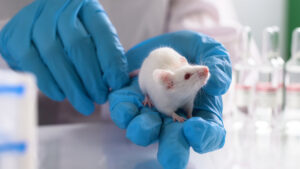
The research team collaborated with scientists at UCLA and conducted a series of experiments on mice, which were later corroborated by studies on human cells. Their research focused on white adipose tissue (WAT), the body’s primary fat-storing tissue. White adipose tissue is responsible for storing excess energy and plays a major role in weight gain and the accumulation of abdominal fat. Scientists have long known that existing fat cells can grow larger with age. However, the researchers suspected that another process might also contribute to an increase in waist circumference: the formation of entirely new fat cells.
If this were true, it would mean that aging adipose tissue could continue to grow not only through the enlargement of existing cells but also through the constant addition of new cells. To test this hypothesis, the team studied adipocyte progenitor cells (APCs), a type of stem cell found in fat tissue. These cells serve as precursors from which fully developed fat cells can form.
Older Stem Cells Produced Far More Fat
The researchers transplanted APCs from both young and older mice into a separate group of young mice. The results were astonishing. APCs taken from older animals generated a large number of new fat cells. The reverse experiment yielded a completely different result. When APCs from young mice were transplanted into older mice, they generated relatively few new fat cells. This suggested that the ability to produce fat intensively was inherent in the older APCs themselves and did not depend on the age of the animal receiving them.
To understand what was happening at the molecular level, the researchers used single-cell RNA sequencing, a technique that allows scientists to examine gene activity in individual cells. The analysis revealed that APCs in young mice were relatively inactive. In middle-aged mice, however, these cells became highly active and began producing large numbers of new fat cells.
“While the growth capacity of most adult stem cells declines with age, the opposite is true for APCs—aging unleashes these cells’ potential to develop and proliferate,” said Dr. Adolfo Garcia-Ocana, holder of the Ruth B. & Robert K. Lanman Endowed Chair in Gene Regulation and Drug Discovery and director of the Department of Molecular and Cellular Endocrinology at City of Hope. “This is the first evidence that our waist circumference increases with age due to the high production of new fat cells by APCs.”
Discovery of a New Type of Age-Related Stem Cell
The scientists discovered that aging did far more than simply activate adipocyte precursor cells (APCs). As the mice reached middle age, a portion of these precursor cells transformed into a previously unknown stem cell population, which the researchers termed “committed preadipocytes, age-specific” (CP-As). Unlike conventional precursor cells, these cells appeared exclusively in connection with the aging process. They also proved to be exceptionally efficient at proliferating and developing into new fat cells. According to the researchers, this newly discovered cell population could provide a key explanation for why fat increasingly accumulates in the abdominal region, particularly in middle and older age—even when lifestyle or body weight remain largely unchanged.

The discovery is significant because, until now, it was generally assumed that existing fat cells simply grow larger over the course of a person’s life. The new findings, however, suggest that the aging body also activates a kind of “replenishment program” and continuously produces new fat cells. As a result, adipose tissue grows not only due to larger fat cells but also due to an increasing number of fat cells. Since fat cells can remain in the body for many years, this process could, in the long term, make it increasingly difficult to lose excess abdominal fat.
The researchers then sought to understand which biological signals trigger this unusual development. Using modern molecular biology methods, they identified a signaling pathway regulated by the leukemia inhibitory factor receptor (LIFR). Signal pathways serve as a communication network for cells: they transmit information about when a cell should divide, grow, or develop into a specific cell type. In the case of the newly discovered CP-A cells, LIFR appears to function, in a sense, as a switch that controls their proliferation and their transformation into new fat cells. “We have discovered that the body’s fat formation process is controlled by LIFR. While young mice do not need this signal to form fat, it is essential for older mice,” Wang explained. “Our research suggests that LIFR plays a crucial role in stimulating CP-As to form new fat cells and increase abdominal fat in older mice.”
For the researchers, this discovery opens up a completely new perspective on the development of age-related obesity. If it is confirmed that the same mechanism also plays a central role in humans, LIFR could become a promising target for new drugs in the future. Instead of merely influencing appetite or boosting fat burning, future therapies could potentially prevent so many new fat cells from forming in the first place as people age. However, this is still basic research, and the findings must be confirmed in further studies.
Similar Fat-forming Cells Found in Humans
To determine whether the findings are also applicable to humans, the research team analyzed adipose tissue from people of different ages using the same single-cell RNA sequencing method. Indeed, the scientists identified cells that closely resembled the newly discovered CP-As in mice. These age-specific precursor cells were found in greater numbers primarily in the adipose tissue of middle-aged humans and also exhibited a pronounced ability to develop into new fat cells. The study thus provides initial evidence that a comparable biological mechanism may also exist in humans.
The detection of similar cells in human tissue is of particular significance to the researchers. Many promising discoveries from animal studies cannot later be translated to humans. The fact that scientists have now found comparable cell populations in human adipose tissue as well strengthens the assumption that the age-related increase in abdominal fat is, at least in part, driven by the same process. Nevertheless, the authors emphasize that further research is needed to understand the exact function of these cells in the human body.
“Our findings underscore how important it is to control the formation of new fat cells in order to combat age-related obesity,” said Wang. “Understanding the role of CP-As in metabolic disorders and the development of these cells with age could lead to new medical solutions to reduce abdominal fat and improve health and life expectancy.”
A Potential New Target for Age-Related Obesity
Although further research is needed, the discovery opens up a promising new approach for scientists to treat age-related obesity. To date, most therapies have focused on reducing calorie intake, curbing appetite, or increasing the body’s energy expenditure. The new study, however, takes a completely different approach: It targets the biological processes that lead to the formation of new fat cells in old age in the first place.
In the next steps, the researchers plan to observe the newly discovered CP-A cells more closely in further animal studies and investigate how they develop over the course of the aging process. At the same time, they plan to investigate whether these cells or the identified LIFR signaling pathway can be specifically blocked or deactivated without impairing other important bodily functions. Since stem cells play a central role in tissue regeneration, any potential interventions must be evaluated with particular care to avoid unwanted side effects.
In parallel, the scientists aim to better understand how CP-A cells behave in human adipose tissue and whether they actually play the same key role as in the mouse experiments. If the results are confirmed, they could pave the way for entirely new medications that not only aid in weight loss but also specifically prevent the age-related formation of new fat cells. Such an approach could particularly benefit people who, despite a healthy diet and regular exercise, accumulate increasing amounts of abdominal fat as they age.
However, it will still be some time before a potential treatment becomes available. The results now published provide fundamental insights into the biological mechanisms of aging and show that the increase in abdominal fat is not necessarily solely a consequence of lifestyle or hormonal changes. Rather, the aging body itself appears to activate programs that promote the formation of new fat cells. It is precisely these processes that could become an important target in the future for preventing metabolic diseases and supporting healthier aging.