



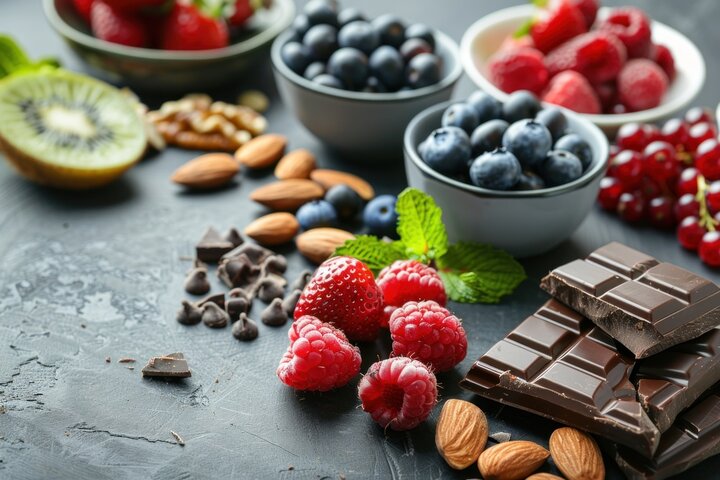
Astringency is the dry, astringent, rough or sandpaper-like sensation that people experience when eating foods rich in certain plant compounds called polyphenols. Polyphenols include flavanols, which have long been associated with a lower risk of cardiovascular disease. Flavanols are particularly abundant in cocoa, red wine and berries, and research has linked them to better memory, improved cognitive performance and protection against brain cell damage.
New research suggests that the astringent sensation caused by flavanols could act as a direct signal to the brain, triggering effects similar to a light workout for the nervous system. In experiments with mice, the intake of flavanols increased activity, curiosity, learning ability and memory – although these compounds barely entered the bloodstream. The key seems to lie in sensory stimulation: The taste itself activates brain pathways associated with attention, motivation and stress response, and stimulates regions responsible for arousal and memory.
A New Hypothesis Focusing on Taste
However, flavanols are a scientific mystery. Only a small proportion of what people consume actually enters the bloodstream after digestion. This low bioavailability raises an important question: If so little is absorbed, how can flavanols still affect brain function and the nervous system?
To get to the bottom of this puzzle, researchers led by Dr. Yasuyuki Fujii and Professor Naomi Osakabe from the Shibaura Institute of Technology in Japan turned their attention to sensory perception. Their study, published in “Current Research in Food Science”, investigated whether the characteristic tart taste of flavanols could itself serve as a signal for the brain.

“Flavanols have an astringent taste. We hypothesized that this taste serves as a stimulus and transmits signals directly to the central nervous system (consisting of the brain and spinal cord). Flavanol stimulation is thought to be transmitted via sensory nerves to activate the brain and subsequently trigger physiological responses in the periphery via the sympathetic nervous system,” Dr. Fujii explained.
Flavanols in Animal Studies
The team tested this idea on 10-week-old mice. The animals were given oral doses of flavanols at 25 mg/kg or 50 mg/kg body weight, while a control group received distilled water. The mice that ingested flavanols showed significantly higher physical activity, an increased willingness to explore and stronger performance in learning and memory tasks compared to the control group.
Analysis of the brain revealed that flavanols increased neurotransmitter activity in several regions. Shortly after administration, the concentrations of dopamine and its precursor levodopa as well as noradrenaline and its metabolite normetanephrine increased in the locus coeruleus-noradrenaline network. These chemicals play an important role in motivation, attention, alertness and stress regulation. The researchers also observed increased production of enzymes essential for noradrenaline synthesis (tyrosine hydroxylase and dopamine-β-hydroxylase) and transport (vesicular monoamine transporter 2), suggesting stronger signaling within this brain system.
Effects Similar to Those of Physical Exercise
Additional biochemical tests showed higher concentrations of catecholamines in the urine, hormones that are released during stress, as well as increased activity in the paraventricular nucleus (PVN) of the hypothalamus. This brain region plays a central role in the control of stress reactions. Ingestion of flavanols also increased concentrations of c-Fos (an important transcription factor) and corticotropin-releasing hormone in the PVN, also indicating activation of stress-related brain pathways. Overall, the results indicate that flavanols can trigger similar physiological responses as physical exercise. Flavanols appear to act not only through uptake into the bloodstream, but also as a moderate stressor that stimulates the central nervous system and leads to increased attention, alertness and memory.
A central mechanism concerns vascular function. Flavanols promote the formation of nitric oxide (NO) in the endothelium, i.e. the inner lining of the blood vessels. This molecule causes the vessels to dilate, thereby improving blood flow. Increased blood flow increases the supply of oxygen and nutrients to organs, especially in the brain. Similar processes are observed during physical exercise, where increased shear forces on the vessel walls also produce more NO. In both cases, vascular elasticity and vascular function are improved. In addition, flavanols appear to act as a mild biological stress stimulus. This so-called hormetic effect describes how a moderate, non-harmful stressor activates the body’s own protection and adaptation systems. This increases the production of antioxidant enzymes, stimulates anti-inflammatory signaling pathways and supports cellular repair mechanisms. Physical activity also works according to this principle: a short-term stress stimulus leads to improved resistance of the organism in the long term.
Flavanols can also have effects on the central nervous system. Improved cerebral blood flow and the influence on neuronal signaling pathways can lead to increased activity in brain regions that are responsible for attention, alertness and memory. There is also evidence that flavanols support processes associated with neuronal plasticity and learning ability. Studies have therefore observed short-term improvements in cognitive performance in some cases.
In summary, it can be said that flavanols not only act passively as antioxidants, but can also stimulate active adaptation processes in the body. The combination of improved vascular function, mild stress stimulation and increased cerebral blood flow results in physiological effects that are similar in certain aspects to those of moderate physical activity, but do not completely replace them. “The stress responses induced by flavanols in this study are similar to those induced by exercise. Therefore, despite their low bioavailability, moderate intake of flavanols may improve health and quality of life,” says Dr. Fujii.
Implications for Sensory Nutrition
The findings point to new possibilities in the emerging field of sensory nutrition. By focusing on the perception of food and its stimulation of the nervous system, the researchers believe it may be possible to develop next-generation foods that combine appealing taste, positive physiological effects and improved palatability.
Sensory nutrition is a nutritional approach that consciously emphasizes sensory perception when eating. It is not just about absorbing nutrients, but about experiencing food with all the senses. Seeing, smelling, tasting, feeling and even hearing while chewing play an important role. Colors, smells, consistency and taste of food are consciously perceived and described.
The aim of sensory nutrition is to promote mindful eating behavior and improve our own perception of hunger and satiety. People who eat slowly and attentively are more likely to recognize when they are really full and often develop a more positive relationship with food. This approach is also used in nutritional counseling and therapy, for example for people with eating disorders or children with sensory hypersensitivity to certain foods. In contrast to traditional diets, sensory nutrition does not focus on calories or prohibitions, but on the conscious experience and enjoyment of food. As a result, eating can once again be perceived more as a pleasant and holistic experience.