




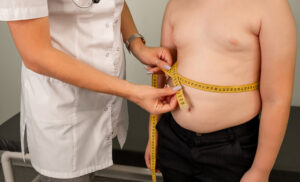
Childhood obesity has increased in recent years. According to the US Centers for Disease Control, about one in five children and adolescents in the United States met the clinical definition of obesity in 2024. Childhood overweight and obesity is also a growing health problem in Europe, although rates are slightly lower on average than in the USA. According to data from the World Health Organization, around 25% of children in the European region between the ages of 7 and 9 are overweight or obese, and around 11% are considered obese. Looking at the WHO European Region as a whole, around one in three school-age children is overweight.
Measures to Curb Obesity in Children
Preventing childhood obesity is not easy. For many years, the main approaches have focused on promoting a healthy diet and regular physical activity. In terms of diet, many programs aimed to reduce the consumption of energy-dense and highly processed foods and instead promote a balanced, nutrient-rich diet. This included recommendations to limit the consumption of sugary drinks, sweets and fast food and to eat more fruit, vegetables, whole grains and unprocessed foods.
At the same time, the promotion of physical activity played a central role. Health organizations generally recommend at least 60 minutes of exercise per day for children, preferably in moderate to intensive form. Prevention programs therefore attempted to integrate exercise more into everyday life, for example through more physical education in schools, exercise programs in kindergartens, the expansion of play and sports facilities in the home environment or initiatives that encourage children to walk or cycle to school. At the same time, attempts have often been made to reduce sedentary leisure activities such as long periods of screen time in front of the TV, computer or smartphone.
Parental Stress can Influence Children’s Eating Habits and Health
Researchers at Yale University now suggest that another important factor should be added to this list: reducing stress in parents. A research team led by Yale psychologist Rajita Sinha found evidence that reducing parental stress can help lower the risk of obesity in young children. “It’s the third leg of the stool,” Sinha said. “We already knew that stress can be a big contributor to the development of childhood obesity. The surprise was that when parents were better able to cope with stress, their parenting improved and the risk of obesity in their young children decreased.” The results were published in the journal Pediatrics.
Previous studies have shown that children are more likely to be overweight if their parents are overweight. Researchers also suspect that parental stress may be another hidden factor in early childhood obesity. Previous work has shown that stressed parents are more likely to eat fast food and unhealthy eating habits. These choices can influence children’s behavior and eating habits. When parents feel overwhelmed, family routines may break down, unhealthy eating habits may become more common, and positive parenting behaviors may decrease.
Yet most current childhood obesity prevention programs focus primarily on nutrition education and physical activity. According to Sinha, these efforts often do not lead to lasting improvements. Sinha is Foundations Fund Professor of Psychiatry and Professor of Neuroscience and Pediatric Research at the Yale School of Medicine.
Testing a Stress Reduction Program for Parents
To investigate the role of parental stress, the researchers conducted a 12-week randomized prevention trial with 114 parents of different ethnic and socioeconomic backgrounds. All participants had children between the ages of two and five who were overweight or obese.

The parents were assigned to one of two groups. One group participated in a stress-focused program called “Parenting Mindfully for Health” (PMH). This program taught mindfulness techniques and behavioral self-regulation skills while providing guidance on healthy eating and physical activity. The other group served as a comparison group and only received advice on nutrition and physical activity.
Both groups met once a week for sessions lasting up to two hours. During the 12-week program, the researchers measured the parents’ stress levels and tracked the children’s weight. The children’s weight was also measured three months after the end of the program. The researchers also observed the parents’ behaviors, such as warmth, listening, patience and positive emotional interactions, as well as the children’s healthy and unhealthy diets before and after the intervention.
Results Show Improvements When Parents’ Stress Decreases
At the end of the study, only the PMH group showed lower parent stress levels, improved parenting behaviors, and a reduction in unhealthy eating in their children. Importantly, the children in this group showed no significant weight gain three months after the end of the program. The control group showed a different pattern. The parents in this group showed no improvement in their offspring’s stress levels, parenting behaviors or unhealthy diets. Their children gained significantly more weight and were six times more likely to fall into the overweight or obese category at the three-month follow-up.
The researchers also observed that the association between high parental stress, weaker parenting behaviors and lower healthy eating in the children in the control group persisted after three months. In contrast, this correlation was no longer significant in the PMH group. “The combination of mindfulness and behavioral self-regulation for stress management, integrated with healthy eating and physical activity, appeared to protect the young children from some of the negative effects of stress on weight gain,” Sinha said.
Building on research on stress and health
This work builds on ongoing research at the Yale Stress Center. The center is an interdisciplinary consortium established with support from a 2007 National Institutes of Health Common Fund initiative to study the biology of stress, health behaviors and their impact on chronic mental and physical illness.
“Childhood obesity is a major problem right now, and the results of this study are highly relevant to the current administration’s primary goal of reducing chronic disease in children,” Sinha said. “When people gain weight, their risk of obesity-related diseases increases, even in children.”
The findings suggest that long-term studies on “Parenting Mindfully for Health” could provide further insights into reducing the risk of childhood obesity. According to Sinha, results from a larger group of families followed over two years are expected in the future.