




Why do some people remain remarkably mentally sharp well into old age, while others develop memory problems much earlier? Researchers at Stanford University have discovered certain patterns of brain activity that could indicate a future risk of Alzheimer’s disease. In some cases, these changes were detectable years before the first noticeable symptoms appeared.
What Are So-Called “Super-Agers”?
Alzheimer’s disease usually develops gradually. Long before those affected notice memory difficulties, changes may already be taking place in the brain. These include, for example, deposits of certain proteins such as amyloid-beta and tau. These are considered important biological hallmarks of the disease. However, not everyone develops pronounced memory impairment despite advancing age and possible pathological changes in the brain. Some people remain mentally sharp well into old age. What protects their brains from age-related decline? A research team at Stanford University is investigating this question. The scientists investigated whether the brain’s resilience can be identified based on certain activity patterns. Their findings were published in the journal Science Advances.

“Super-agers” are older adults whose memory performance is significantly above the average for their age group. In the Stanford study, this referred to people aged 75 and older who achieved results on memory tests typically expected of people around 45 years old. At the same time, they possessed age-appropriate abilities in other cognitive areas, such as planning and problem-solving. According to estimates, about ten percent of the older population may belong to this group—depending on how precisely “Super-Agers” are defined.
An earlier study published in January 2025 in the journal GeroScience suggests that these individuals may also age more slowly biologically. For this study, the researchers compared 63 “super-agers” with 90 older adults with average memory performance. Using MRI scans and an AI-based method, they determined the biological age of the brains. The result: On average, the brains of the Super-Agers appeared younger than those of the control group. A follow-up examination two years later also showed evidence of slower aging.
The Stanford researchers now wanted to determine more precisely whether the brains of these exceptionally capable older adults also differ from those of other people in terms of specific activity patterns. Previous studies often compared Super-Agers with older adults whose cognitive abilities fell within the normal range. However, there are differences even within this group: Some people already exhibit biological changes associated with Alzheimer’s, even though their memory function is still normal. The Stanford team therefore took a different approach. It compared people with exceptionally good memory function directly with people of the same age who had already been diagnosed with Alzheimer’s.
Brain Scans Reveal Different Patterns of Activity
For the study, the scientists analyzed functional MRI scans of 180 “super-agers” and 110 people with Alzheimer’s. Functional magnetic resonance imaging (fMRI) measures how active different areas of the brain are. The researchers used what are known as resting-state scans. In these scans, participants lie still in the scanner without having to perform a specific task. Nevertheless, activity patterns can still be identified. This is because different regions of the brain continue to interact and exchange information even at rest.
The scientists found that the activity of certain brain regions differed significantly between the two groups studied. Some areas showed greater activity in the super-agers, while others showed less. The key factor was the interaction between the different regions. These connections between brain areas are referred to as functional connectivity. The totality of these connections is also called the functional connectome. Based on these differences, the researchers developed a new assessment metric: the Alzheimer’s Resilience-Vulnerability Connectome Score, or ARC Score for short. Using this method, they were able to distinguish between Super-Agers and people with Alzheimer’s based on their brain activity patterns with an accuracy of about 85 percent.
Can Brain Signals Indicate Alzheimer’s Years in Advance?
The scientists then wanted to know whether the ARC Score could also be applied to people who do not yet have any noticeable memory problems. To this end, they studied more than 1,300 adults between the ages of 55 and 70. At the start of the study, all participants showed no signs of cognitive impairment. In the memory tests, there were initially no significant differences between people with high and low ARC scores. Differences only became apparent as the study progressed.
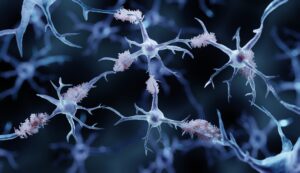
Participants whose brain activity more closely resembled the patterns seen in people with Alzheimer’s disease were more likely to experience a decline in their cognitive function. This decline affected not only memory but also attention and what are known as executive functions. These include, for example, planning, organizing, and decision-making. In addition, people with these activity patterns were more likely to develop amyloid-beta deposits and, as the study progressed, were more frequently diagnosed with Alzheimer’s disease.
In contrast, the outlook was more favorable for individuals whose brain activity more closely resembled that of “super-agers.” On average, they were able to maintain their cognitive abilities for a longer period of time. Some participants were followed for up to twelve years. However, most of the available follow-up periods were around five to six years.
The New Test Could be Superior to Previous Studies
The researchers also compared the predictive power of the ARC score with established risk factors and assessment methods. These included demographic characteristics, genetic risk factors, and the well-known Alzheimer’s biomarkers amyloid-beta and tau. The new assessment scale performed comparably or, in some cases, better in predicting subsequent cognitive decline. When the information from the ARC score was combined with existing biomarkers, the predictive accuracy improved further.
The advantage may lie in the fact that brain activity patterns indicate changes associated with later cognitive decline even before other known disease markers become clearly pronounced. The scientists see this as a potential complement to existing methods of early Alzheimer’s detection.
Brain Age is Not the Same as Alzheimer’s Risk
Another part of the study focused on what is known as “brain age.” This is an estimate of how old the brain appears to be, based on certain imaging characteristics, when compared to healthy reference individuals. Although the researchers identified a correlation between brain age and the ARC score, they emphasized that the two measures provide different types of information.
While brain age reflects general aging processes, the ARC score is intended to provide a more specific indication of whether activity patterns suggest resilience or an increased susceptibility to cognitive decline. In the future, this could help more accurately distinguish between people whose brains remain functional despite advanced age and those who already show signs of an increased risk of later decline.
Can Brain Training Protect Against Alzheimer’s?
The results also raise another question: Can brain activity be specifically modified to strengthen its resilience? Lead study author Yu Zhang believes it is conceivable that certain activity patterns could be influenced in the future through targeted interventions. The research team cites cognitive training and transcranial magnetic stimulation as possible approaches. Transcranial magnetic stimulation uses magnetic pulses to influence the activity of specific brain regions. The procedure is already used in other medical fields, such as in the treatment of certain types of depression.

However, it is not yet clear whether this approach can actually provide a benefit for Alzheimer’s prevention. The Stanford team is therefore planning a further study in which ARC values will be measured before and after targeted cognitive training. The scientists want to find out whether this can shift brain activity toward the patterns observed in older adults who are particularly mentally fit. Whether such a change can actually reduce the risk of Alzheimer’s or influence the course of the disease remains to be seen.
What We Can Do Ourselves to Maintain a Healthy Brain
Even though the new study does not yet provide a specific prevention method, there are already ways to support brain health today. Regular exercise is one of them. Physical activity promotes blood circulation and has a positive effect on various metabolic processes. A balanced diet, sufficient sleep, and social interactions also play a role. In addition, mental stimulation should not be neglected. Reading, learning a language, playing music, or taking on new challenges in daily life can all help keep the brain active.
It is also important to identify health risk factors such as high blood pressure, diabetes, and high cholesterol early on and seek treatment. Vascular health is also important for long-term brain function.
No Alzheimer’s Test Yet for Medical Practice
The results of the Stanford study are promising, but they must be interpreted correctly. The ARC score is currently a research tool and not an approved method for diagnosing Alzheimer’s. Nor do the activity patterns provide an unchanging prediction of a person’s future. The scientists explicitly point out that brain activity can change over the course of a person’s life. Aging processes, brain injuries, and certain mental or neurological disorders can also influence the measured values.
The researchers therefore hope to clarify in further studies how reliably the method can be applied and whether targeted interventions can actually alter the observed patterns. The Stanford research shows that the future risk of cognitive decline may not be assessable solely on the basis of protein deposits or memory tests. Communication between different brain regions could also provide important clues. If the results are confirmed in further studies, this could, in the long term, create new opportunities to identify people at increased risk for Alzheimer’s earlier and provide them with timely support.