



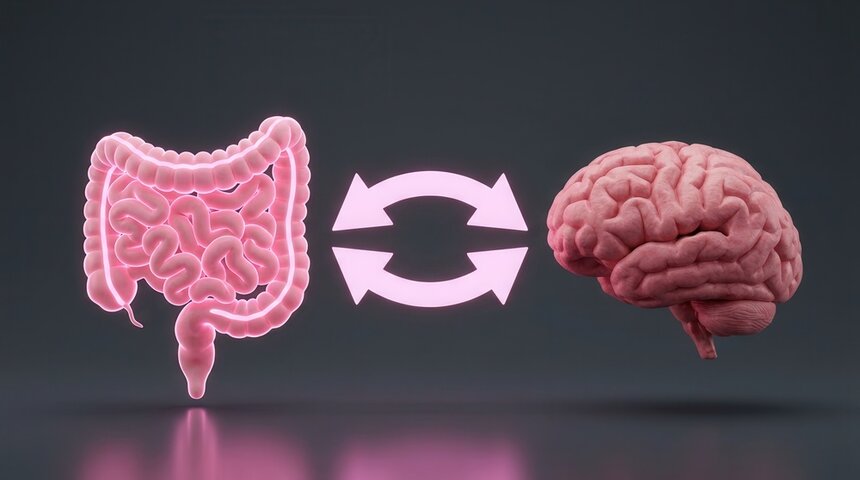
A particular meal, a familiar smell, or a distinctive taste can trigger memories dating back decades. Scientists are now discovering that such associations may not originate solely in the brain: Signals from the gut may also influence which experiences related to food are permanently stored. The study, led by Scott Kanoski, a professor of biological sciences at USC Dornsife College of Letters, Arts, and Sciences, suggests that the gut may contribute to memory formation, particularly when an experience is linked to the search for and consumption of food.
How Signals from the Gut Reach the Memory Center
The study, published in *Nature Communications*, examined the vagus nerve, one of the body’s most important communication pathways between the digestive system and the brain. It is already known that this nerve influences digestion, appetite, and feelings of fullness. The new findings suggest that it may also transmit information that helps the brain store memories. In experiments with rats, the researchers found that consuming nutrient-rich food increased the release of acetylcholine in neurons connected to the hippocampus. The hippocampus is a region of the brain that plays a central role in learning and memory.

Acetylcholine is a neurotransmitter that helps the brain store new information and form memories. The increase depended on signals transmitted from the gut via the vagus nerve. When the researchers blocked communication along the vagus nerve, acetylcholine levels no longer rose after the animals ate. The rats also had greater difficulty on tests in which they had to remember where they had found food shortly before.
Nutrients Are More Important Than Sweetness
The experiments also showed that the brain’s memory system responded to the nutritional content of food and not simply to how pleasant or sweet it tasted. Rats that consumed sugar or fat showed strong activity in the brain pathways responsible for memory. In contrast, animals given low-calorie or calorie-free liquids with a sweet taste did not show a comparable response. The results suggest that the brain distinguishes between taste and actual nutritional value. A sweet taste alone was not enough to activate the memory-related brain pathways.
“We believe this mechanism likely evolved to help animals remember important information about food sources,” said the study’s first author, Logan Lauer, a doctoral student in Kanoski’s lab. Remembering where certain plants first sprout in the spring can help hungry animals find important nutrients. Signals from the gut tell the brain, “This meal provided valuable nutrients, so remember where and how you got it.”
Why Memories of Food Locations are Important
For animals in the wild, remembering the location of a reliable food source can be a matter of survival. Knowing where energy-rich plants grow, where prey can be found, or which locations regularly provide food saves valuable time and energy when foraging. The brain has therefore developed mechanisms that highlight particularly important information and store it long-term. A meal that provides the body with valuable nutrients can trigger a kind of biological feedback through signals from the digestive system. In doing so, the gut not only tells the brain that food has been ingested, but possibly also that this food had a particular benefit.
This information is transmitted via the vagus nerve to various areas of the brain, including the hippocampus. The hippocampus is crucial for spatial memory—that is, the ability to remember places, paths, and environments. This allows an animal to return specifically to the same location after a successful foraging trip. This mechanism could explain why certain experiences related to eating remain particularly firmly embedded in memory. A meal is not stored in isolation, but rather together with the circumstances under which it was found or consumed: the location, the smells, the visual impressions, and the situation.
From an evolutionary perspective, this connection between the gut and the brain makes sense. For an animal, a nutritious meal represents a survival advantage. The nervous system therefore may treat such information as particularly valuable and ensure that it is prioritized for storage.
This mechanism may also play a role in humans. Although we no longer typically forage for food in the wild today, many people still associate certain dishes with specific places, people, or stages of life. The smell of a particular food or the taste of a meal can therefore trigger very strong memories.
An Unhealthy Diet Could Weaken this Signaling Pathway
The study not only shows how food can support memory formation but also that a long-term unhealthy diet may have negative effects on this gut-brain connection. Although foods high in sugar and fat can initially trigger strong reactions in the reward and memory systems, long-term consumption of these foods appears to have the opposite effect. Rats that were fed a diet very high in fat and sugar for an extended period starting at a young age later showed weaker communication between the gut and the hippocampus—the brain region critical for learning, orientation, and memory storage.

Even after the animals were switched back to a healthier diet, memory-related signal transmission did not fully recover. These rats performed worse on memory tests, particularly on tasks requiring them to remember where they had previously found food. The researchers suspect that a chronically unbalanced diet may impair the body’s ability to reliably transmit important information from the digestive system to the brain. This could weaken the very signaling pathway that originally ensures that valuable experiences related to food are stored particularly well.
One possible explanation could be that a diet very high in sugar and saturated fats promotes, over the long term, inflammatory processes, changes in metabolism, or disruptions in the interaction between the gut and the nervous system. However, further investigation is needed to determine which of these factors are actually decisive and whether the changes can be fully reversed.
Possible Links to Cognitive Decline
These findings could have far-reaching implications for human health. Obesity, poor nutrition, and metabolic diseases such as diabetes have already been linked to a higher risk of cognitive decline. This research points to a possible biological explanation. Repeated consumption of unhealthy foods could gradually damage or disrupt communication between the gut and the brain, making it more difficult for the memory system to function normally.
The findings could also provide insights into neurodegenerative diseases. “The disruption of acetylcholine signaling in the hippocampus is one of the earliest neurochemical changes in Alzheimer’s disease, ”said Kanoski. “Since it has now been shown that this system is amplified by signals from the gut via the vagus nerve, new therapeutic approaches could use this information to explore vagus nerve-based methods such as vagus nerve stimulation.”
New Possibilities for Memory Treatments
The discovery opens up new perspectives for research into memory disorders and the gut-brain connection. If the described mechanism is confirmed in humans, future treatment approaches could aim to specifically support communication between the digestive system and the brain.
One possible strategy could be to focus more closely on the vagus nerve. This nerve connects numerous organs to the brain and plays an important role in transmitting bodily signals. Vagus nerve stimulation is already being studied for various neurological and psychiatric disorders, including epilepsy and depression. The new findings raise the question of whether this method could also be significant for processes related to learning and memory.
Gut health could also play a greater role in future research on cognitive functions. A balanced diet, a healthy metabolism, and a stable gut microbiome are increasingly being linked to brain function. However, it is not yet fully understood which specific changes in the gut actually affect memory and how these can be specifically influenced.
The researchers emphasize that further studies are needed to verify whether the processes observed in rats occur in the same way in humans. So far, the results primarily provide important evidence that memory does not originate exclusively in the brain but can be influenced by a complex interplay of various bodily systems. Research on the gut-brain axis thus demonstrates once again how closely digestion, metabolism, and the nervous system are interconnected—and that the gut may play a greater role in our mental health than has long been assumed.