




Modern weight-loss medications have revolutionized the treatment of obesity and helped many people lose a significant amount of weight. However, these medications often have a major drawback: they can also lead to a loss of muscle mass. Now, researchers have discovered a biological mechanism that could one day help solve this problem while also boosting the body’s fat-burning capacity.
Scientists at the Weizmann Institute of Science have identified a protein called MTCH2—nicknamed “Mitch”—that appears to play a key role in how cells manage energy and store fat. In a study recently published in the EMBO Journal, the team found that deactivating this protein in human cells increases the rate at which fats and carbohydrates are burned while simultaneously reducing the formation of new fat cells. The findings build on earlier research in mice that led to a surprising result: animals lacking Mitch in their muscles became physically fitter, developed greater endurance, and were remarkably resistant to obesity.
A Surprising Discovery in Mice
A few years ago, Prof. Atan Gross and his colleagues made an unexpected observation while studying Mitch. When the researchers suppressed the production of the protein in the mice’s muscle tissue, the animals showed significant improvements in their body composition.

Not only did the mice avoid obesity, but they also developed more muscle fibers. These fibers consume large amounts of oxygen and are associated with improved endurance and athletic performance. The animals performed better on physical stress tests and also showed improved heart function.
The discovery raised an important question: How could the inactivation of a single protein both protect against obesity and increase physical endurance? To answer this question, the researchers turned their attention to the mitochondria—those tiny structures inside cells that are often referred to as their “powerhouses.” Mitochondria generate the energy that cells need to function and play a central role in metabolism—the set of chemical processes that convert food into usable energy.
How Mitochondria Influence Fat Burning
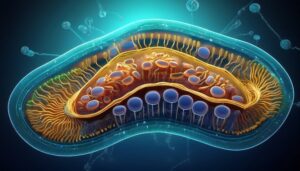
The research focuses on mitochondria —tiny cellular components often referred to as the “powerhouses of the cell.” Their job is to use nutrients such as fats, carbohydrates, and, to some extent, proteins to provide the energy in the form of ATP (adenosine triphosphate) that the body needs for nearly all vital processes. Muscle cells, in particular, contain a very large number of mitochondria, as they consume large amounts of energy with every movement. However, the efficiency of this energy production depends not only on the number of mitochondria but also on how they are structured and interconnected.
Mitochondria are not rigid cellular components. They constantly change their shape, fuse together, or split apart again—a process known as mitochondrial dynamics. When many mitochondria fuse to form a large network, they operate particularly efficiently and can generate energy with comparatively low fuel consumption. If, on the other hand, they are divided into many small, separate units, their efficiency decreases. To still provide sufficient energy, the cells must consume significantly more fuel. To do so, they increasingly rely on fats, carbohydrates, and amino acids.
It is precisely at this point that the protein MTCH2—which the researchers have nicknamed “Mitch”—appears to play a crucial role. Over the course of years of research, the team led by Prof. Atan Gross at the Weizmann Institute of Science discovered that Mitch regulates what is known as mitochondrial fusion—that is, the merging of mitochondria into larger networks. When the protein is active, the mitochondria remain better organized and function particularly efficiently. If Mitch is absent, however, their structure changes fundamentally: the network breaks down into many smaller units, making energy production less efficient.
At first glance, lower energy efficiency sounds like a disadvantage. However, it could actually have benefits for metabolism. Because the cells must meet their energy needs despite the less efficient mitochondria, they increase their fuel consumption. As a result, they continuously burn more fat and other energy reserves. It is precisely this mechanism that could explain why mice without Mitch remained significantly leaner, developed more muscle mass, and at the same time exhibited greater endurance than their counterparts. After this correlation had been demonstrated in animal experiments, the scientists wanted to find out whether the same mechanism also exists in human cells.
What Happens When Mitch is Removed?
In the new study led by doctoral student Sabita Chourasia, the Mitch protein was removed from human cells using genetic engineering techniques. The results were dramatic. Without Mitch, the normal mitochondrial network broke down into individual units. Energy production became less efficient, leaving the cells in a state the researchers describe as a constant energy deficit.
At first glance, this may seem harmful. However, if the goal is to increase energy expenditure and reduce fat accumulation, this type of inefficiency can actually work in the body’s favor. Cells that have difficulty producing energy must consume more fuel to meet their needs.
“After silencing Mitch, we examined the effects every few hours on more than 100 substances involved in metabolism in human cells,” explains Chourasia. “We observed an increase in cellular respiration—that is, the process by which the cell uses oxygen to extract energy from nutrients such as carbohydrates and fats. This explains the increased muscle endurance seen in earlier experiments with mice.”
Human Cells Begin to Consume More Fat
Since the modified cells required more energy, they increased their consumption of available energy sources. The researchers observed a greater breakdown of fats, carbohydrates, and amino acids. They also noted a significant change in the way the cells generated energy. Normal cells typically rely more heavily on carbohydrates and proteins. Cells without Mitch, however, utilized fat to a much greater extent as their primary energy source.
“We found that deactivating Mitch led to a sharp decline in fats in the membranes,” explains Gross. “At the same time, we observed an increase in the amount of fat used for energy production and realized that the fat was being broken down from the membrane to be used as fuel. In other words, we have shown that Mitch determines the fate of fat in human cells.” The results suggest that Mitch acts as a key regulator that helps determine whether fat is stored or burned.
Blocking the Formation of New Fat Cells
The researchers discovered another important effect of removing Mitch. Previous studies had shown that women with obesity tend to have elevated levels of the protein. This observation prompted the team to investigate whether Mitch might also influence the formation of new fat cells.
Fat cells develop from precursor cells, known as progenitor cells. Under the right conditions, these immature cells accumulate fat and develop into mature, fat-storing cells through a process called differentiation. When the researchers removed Mitch from the progenitor cells, this transformation became significantly more difficult.
“When we removed Mitch from the progenitor cells, we found that the environment created within these cells was not conducive to the synthesis of new fats,” explains Gross. “The restriction of the ability to synthesize membranes prevents the cells from growing, developing, and reaching the point where differentiation is possible. The process of fat accumulation requires a large amount of available energy, but cells lacking Mitch suffer from an energy shortage. In addition, the expression of genes necessary for differentiation is suppressed, and there is a lack of the substances essential for this process. As a result, both the differentiation of new fat cells and fat accumulation are reduced.” In other words: Cells lacking Mitch not only burned more fat but were also less capable of forming new fat-storing cells.
A potential New Direction for Obesity Research
Although the current study was conducted exclusively on human cell cultures and in earlier studies on mice, and many years of research are still needed before a potential therapy can be developed, it provides important new insights into the biological mechanisms of energy metabolism. The results show for the first time that MTCH2 (“Mitch”) apparently functions as a kind of switching center that helps determine whether cells store energy as efficiently as possible or, instead, burn more fat as fuel.

By increasing fat burning while simultaneously limiting the formation of new fat cells, the targeted manipulation of Mitch could, in the long term, open up a completely new strategy for treating obesity. While many current medications primarily reduce appetite or increase the feeling of fullness, this approach would directly intervene in the cells’ energy metabolism. The goal would be not only to reduce calorie intake but also to cause the body to expend more energy while simultaneously forming fewer new fat deposits.
This discovery is particularly interesting in the context of modern weight-loss medications, such as GLP-1 receptor agonists. While these can lead to significant weight loss, part of the lost weight often consists of muscle mass. This is particularly problematic for older adults, as muscle loss can increase the risk of frailty, falls, and metabolic disorders. A therapeutic approach that boosts fat burning while preserving or even strengthening muscle mass could therefore represent a significant advance.
However, the researchers emphasize that many questions remain unanswered. Before MTCH2 can actually be used as a target for new drugs, it must be determined what functions the protein performs in other organs and whether its targeted inhibition is safe in the long term. Since mitochondria are involved in nearly all metabolic processes, it is essential to ensure that any intervention does not have undesirable effects on the heart, brain, or other tissues.
Nevertheless, the scientists view their discovery as a promising approach for the future of obesity research. If researchers succeed in selectively targeting this newly identified mechanism, therapies could one day be developed that not only aid in weight loss but also improve metabolism, limit muscle loss, and reduce excess body fat more sustainably.