



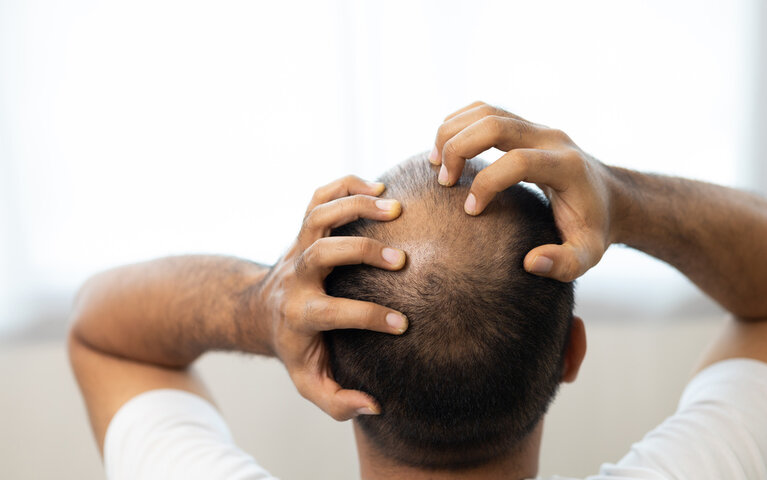
Androgenetic alopecia (AGA) is the most common form of hair loss and affects millions of men and women worldwide. It is often referred to as male or female pattern hair loss and usually develops gradually as the hair follicles shrink over time. As the follicles become smaller, they produce thinner, shorter hair until growth slows dramatically or stops altogether.
Current treatments, including finasteride and minoxidil, can help some people, but are not ideal for everyone. Finasteride works by targeting hormones involved in hair follicle shrinkage, while minoxidil is usually applied to the scalp to stimulate hair growth. However, some patients are concerned about adverse effects, including sexual side effects associated with finasteride or scalp irritation from minoxidil. For this reason, many people continue to look for alternatives that feel safer, more natural or more comprehensive.
Ancient Root Meets Modern Hair Research
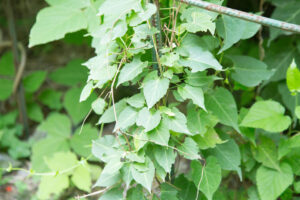
A new scientific review suggests that Polygonum multiflorum, a root long used in traditional Chinese medicine, should be seriously considered as a potential treatment for androgenetic alopecia. The herb has been used for more than 1,000 years and has traditionally been associated with “turning hair to black” and “strengthening vitality”. These historical descriptions have increasingly attracted the interest of modern researchers in recent years, as they show surprising parallels with today’s concepts of hair biology.
What makes the current analysis particularly interesting is the assumption that the plant not only acts via a single mechanism of action, but could simultaneously influence several biological processes involved in the hair cycle. It is precisely this multimodal approach that distinguishes it from many classic therapies, which usually only address one specific signaling pathway. The hormone dihydrotestosterone (DHT) plays a central role in androgenetic alopecia. It is produced from testosterone and binds to receptors in the hair follicles, causing them to gradually shrink. This process is known as miniaturization and leads to the growth phase of the hair becoming shorter and shorter until the follicles finally produce hardly any visible hair. According to the review, there are indications that Polygonum multiflorum could at least partially modulate this hormonal influence, for example by influencing enzymes involved in the conversion of testosterone to DHT or by reducing the sensitivity of hair follicles to this hormone.
The researchers are also discussing other possible mechanisms of action that go beyond the hormone balance. These include influencing cell stress and inflammatory processes in the scalp, which play an additional role in many sufferers. Chronic micro-inflammation can further weaken the function of the hair follicles and accelerate the transition into the resting phase of the hair cycle. Initial laboratory tests indicate that certain ingredients in the root have antioxidant properties and could therefore weaken cell-damaging processes.
Another important aspect concerns the so-called hair follicle stem cells. These specialized cells are crucial for hair regeneration, as they can restart the follicle cycle again and again. In androgenetic alopecia, these stem cells are often preserved, but become less functionally active. Some experimental data suggest that Polygonum multiflorum could influence signaling pathways associated with the activation of these stem cells, which could potentially return dormant follicles to a growth phase. Blood flow to the scalp is also mentioned as a possible factor in the review. Improved microcirculation could support the supply of oxygen, amino acids and growth factors to the hair follicles. This is particularly relevant as hair follicles are among the most metabolically active structures in the body and are heavily dependent on a stable supply of nutrients.
Overall, this creates the image of an approach that not only targets a single trigger of hair loss, but could address several levels simultaneously: hormonal regulation, cell protection, anti-inflammation and possibly even the reactivation of dormant follicles. It is precisely this combination that the authors of the review believe makes the plant an interesting candidate for further research in the field of hair regeneration.
A Multi-Layered Approach to Hair Regrowth
The review also describes several other potential benefits. Polygonum multiflorum could help prevent premature death of follicle cells, which is important because healthy follicles rely on active, living cells to maintain the hair growth cycle. It may also activate important biological signals involved in regeneration, including the Wnt and Shh signaling pathways. These signaling pathways are important because they help control cell growth, communication and tissue repair. In hair follicles, they are closely linked to the transition from the resting phase to the active growth phase. If these signals are stronger, it is more likely that the follicles will return to a growth state.
The herb may also improve blood flow to the scalp. Better blood flow can help carry oxygen and nutrients to the follicles, promoting the environment needed for healthier hair growth. This is one reason why researchers see Polygonum multiflorum as potentially more versatile than conventional treatments that focus on a single target.
“Our analysis bridges the gap between ancient knowledge and modern science,” said Han Bixian, lead author of a recent review paper on the subject published in the Journal of Holistic Integrative Pharmacy. “What surprised us was how consistently historical texts – from the Tang Dynasty onwards – described effects that perfectly match today’s understanding of hair biology. Modern studies now confirm that this is not folk wisdom, but pharmacology.”
From Traditional Records to Laboratory Findings
The review summarizes various types of evidence, including laboratory studies, clinical reports and historical records of herbal use. These older records are not evaluated as stand-alone evidence. Instead, the researchers compare traditional claims with modern biological evidence to determine where they overlap.
This overlap appears to be one of the main reasons for the renewed interest in Polygonum multiflorum. The review suggests that the herb may do more than just slow hair loss. Through its effect on growth factors and signaling pathways, it could help create conditions that support regeneration. This is an important distinction. Many hair loss treatments are mainly aimed at preserving existing hair or slowing further thinning. A treatment that actively supports regrowth through different mechanisms could offer a different approach, especially for people who have not responded well to existing options.
Safety Depends on the Right Preparation
The review also emphasizes that with Polygonum multiflorum, it is not only the ingredients themselves that are decisive, but above all the way they are processed. In traditional Chinese medicine, the root is generally not used raw, but is first specially processed, usually by repeated steaming or cooking with certain additives. This step is considered crucial because it changes the chemical composition of the plant and can therefore influence both its biological effect and its safety profile.
Further Clinical Trials are Still Required
Although the results are promising, the researchers emphasize that stronger clinical evidence is still needed. Much of the current evidence comes from laboratory studies, historical records and limited clinical observations. Extensive, carefully designed human studies would be needed to confirm how well Polygonum multiflorum works for androgenetic alopecia and how safe it is in different patient groups.
Nevertheless, the review points to an overarching idea of growing scientific importance. Traditional remedies may contain biologically active ingredients that, when studied with modern methods, can serve as inspiration for new treatments. In the case of Polygonum multiflorum, centuries of use are now being studied from the point of view of hormone biology, cell survival, growth signaling pathways and scalp circulation.
For people struggling with hair loss, the research offers a hopeful but cautious message. A root used for more than a millennium may not yet be able to replace today’s treatments, but it could help drive the next generation of hair restoration therapies.