





Are you looking for a specific product?
Chronobiology Rhythm of Life
Each cell in our body follows its own specific inner rhythm.
Activity and regeneration, reaction and rest follow each other. External and internal time givers control our physical, mental and emotional functions. It is therefore evident that the effect of medicines also varies throughout the day.
Chronotherapy investigates the effect of therapeutic measures in harmony with our inner clock.
This knowledge is infinitely valuable for the committed doctor. It can help avoid doing the right thing at the wrong time. Chronotherapy can be the decisive factor in supporting the body exactly at a time the assistance achieves a maximum effect. Thus, efficacy is increased and undesirable disturbing side effects are reduced.
The Four Elements of Chronobiology
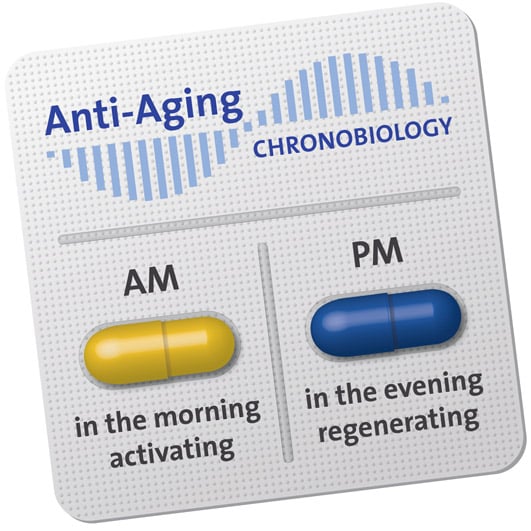
- The optimal substance
- The right quantity
- The right quantity
- The most effective time point
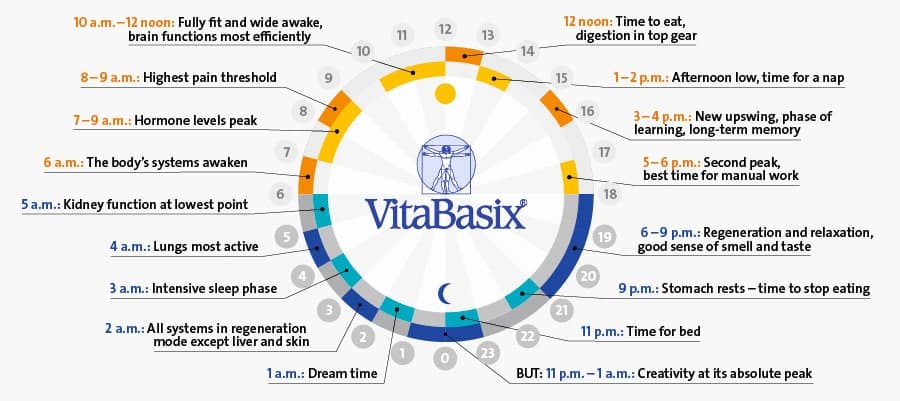
Chronobiological phases over the course of a day


Current news for your health
-

Why Rheumatoid Arthritis Tends to Affect Certain Joints: The Cause May Lie in the Period Before Birth
Rheumatoid arthritis does not affect all joints equally. Some joints are affected particularly frequently, while others remain largely unaffected despite the same autoimmune disease. Researchers have been studying why this is the case for many years. A new study by researchers at the Kennedy Institute now offers a possible explanation: the varying susceptibility of certain…
-

Plasmalogans from the Ocean: A New Approach to Combating Brain Aging
The aging process often manifests itself in familiar ways, ranging from gray hair and wrinkles to memory lapses. This has raised a long-standing scientific question: Could some of these changes ultimately be slowed, prevented, or even reversed? A study involving a group of scientists from Xi’an Jiaotong-Liverpool University, Stanford University, Shanghai Jiao Tong University, and…
-
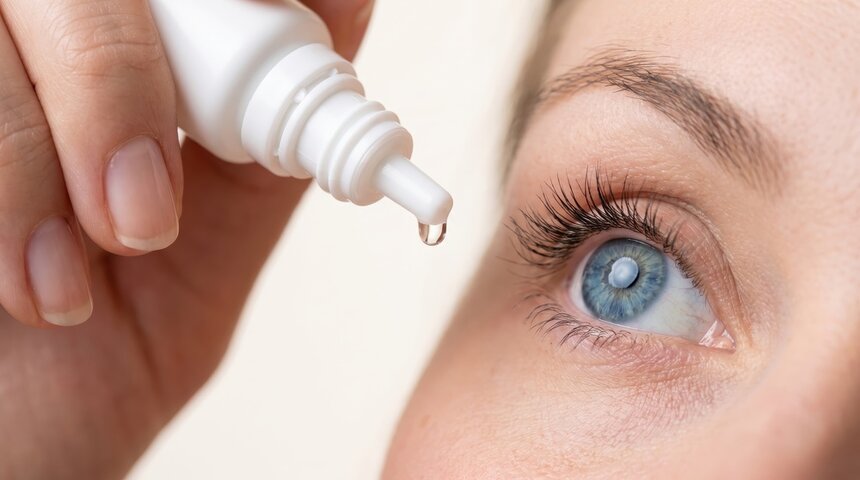
New Eye Drops Restore Vision in Blind Mice
Photoreceptor degeneration is one of the leading causes of severe visual impairment and blindness. Conditions that fall under this category include age-related macular degeneration (AMD) and retinitis pigmentosa (RP). Worldwide, an estimated 200 million people are affected by these diseases. In these conditions, the light-sensitive photoreceptors of the retina are gradually damaged and eventually die…