




The aging process often manifests itself in familiar ways, ranging from gray hair and wrinkles to memory lapses. This has raised a long-standing scientific question: Could some of these changes ultimately be slowed, prevented, or even reversed? A study involving a group of scientists from Xi’an Jiaotong-Liverpool University, Stanford University, Shanghai Jiao Tong University, and the University of the Chinese Academy of Sciences points to a fascinating possibility. In experiments with aged mice, the researchers found that dietary supplements containing compounds derived from ascidiaceans—commonly known as sea squirts—reversed several signs associated with aging.
An Unusual Source of Anti-Aging Compounds
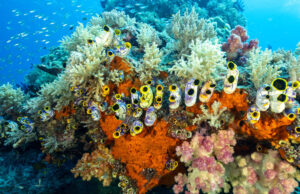
Sea squirts are marine animals consumed in parts of Asia, including Korea (where they are known as meongge or 멍게) and Japan (hoya or ホヤ). They belong to the phylum Tunicata and are biologically remarkable because, despite their simple, often immobile appearance, they are chordates and are thus evolutionarily related to vertebrates. As adults, they are usually firmly attached to rocks, harbor structures, or other solid surfaces and filter seawater to ingest the microorganisms and organic particles it contains as food. Some species are specifically farmed and offered as a delicacy in Asian cuisine. They can be eaten raw and contain high concentrations of so-called plasmalogens.
Plasmalogens are a type of lipid—that is, fat molecules—that form an important component of cell membranes. They occur naturally throughout the human body and are particularly abundant in the brain, heart, and immune cells. Their concentration tends to decrease with age. Reduced plasmalogen concentrations have also been observed in various neurodegenerative diseases, including Alzheimer’s and Parkinson’s. This association has prompted researchers to investigate whether restoring plasmalogen levels could help protect the brain from some of the changes associated with aging.
To explore this possibility, the team added plasmalogens to the diet of older mice and examined how the dietary supplement affected both their behavior and their physical condition. The results were remarkable. The treated mice showed significant improvements in learning and also exhibited visible physical changes. Professor Lei Fu, the study’s corresponding author, said: “Our research suggests that plasmalogens may not only halt cognitive decline but may even reverse cognitive impairments in the aging brain. In addition, older mice fed plasmalogens grew new black hair that was thicker and shinier than that of older mice that did not receive the dietary supplement.” According to the researchers, the study provides the first detailed insight into how plasmalogens might influence the aging brain.
Older Mice Show Improved Memory
To measure learning and memory, the scientists used a common laboratory experiment called the “Morris water maze.” In this test, mice are placed in a tank containing a hidden platform where they can rest.
Since mice generally prefer to escape the water, they gradually learn where the platform is located. After several days of training, younger mice typically remember its position and swim quickly toward it. Older mice often take longer to find the platform, reflecting the decline in learning and memory abilities associated with aging. After five days of training, older mice that had been given plasmalogens performed much more similarly to the younger mice. They reached the platform significantly faster than older mice that had not received the treatment. The researchers then examined the animals’ brains to determine what might explain this improvement.
They found that mice administered plasmalogens had more synapses and that these synapses appeared to be in better condition than those of the untreated older mice. Synapses are the tiny connection points through which nerve cells communicate with one another. They enable the transmission of signals through neural networks and are essential for learning, memory, and many other brain functions.
Restoring Connections in the Aging Brain
Synapses are extremely adaptable in youth. This ability to change and form new connections—often referred to as neural plasticity—helps the brain learn new information and acquire new skills. With age, however, synapses can decrease in number and lose effectiveness. A similar decline is also associated with neurodegenerative diseases and can contribute to a decline in cognitive abilities.

In the experiment, older mice that received plasmalogen supplements appeared to be better able to form new neural connections and learn new tasks than mice fed a normal diet. The results suggest that increasing dietary plasmalogen intake could help protect synapses from certain forms of age-related decline. The researchers also noted another important difference between the groups: inflammation in the brain was significantly lower in the mice that received plasmalogens.
Inflammation is part of the body’s normal immune response, but chronic or excessive inflammation in the brain can become harmful. As the brain ages, immune activity can become unbalanced, potentially damaging nerve cells and disrupting communication between synapses. Persistent inflammation is also considered a major factor in the development of various neurodegenerative diseases. The reduction in inflammation observed in the mice treated with plasmalogens could therefore explain why they performed better on learning and memory tests.
How Plasmalogens May Work
Scientists do not yet know exactly how dietary plasmalogens produce these effects. Professor Fu outlined several possible mechanisms. “We have found that plasmalogens significantly increase the number of molecules that support the growth and development of neurons and synapses in the brain. This suggests that plasmalogens may promote neuroregeneration. There is also growing evidence that plasmalogens directly influence the structural properties of synapses. Plasmalogans could increase the fluidity and flexibility of synaptic membranes, thereby influencing impulse transmission between neurons.”
Neuroregeneration refers to the repair, renewal, or regrowth of nerve cells and their connections. If plasmalogens support this process, they could potentially help the aging brain maintain or rebuild some of the neural circuits necessary for memory and learning. The researchers also believe that the effects may not be limited to what happens directly in the brain. Professor Fu points to the gut-brain axis as another possible mechanism of action. Some studies have shown that dietary plasmalogens influence the microorganisms in the gut. It is widely known that the connection between the organisms in our gut and our brain influences neurodegeneration. It may be the effect of plasmalogens on this connection that causes the improvements in learning and memory observed in this study.
The gut is home to vast communities of bacteria and other microorganisms, collectively referred to as the gut microbiome. Research findings increasingly suggest that these microbes can influence the brain through immune signals, metabolism, and other biological pathways. Scientists often refer to this two-way communication system as the gut-brain axis.
Could Plasmalogens Ultimately Help People?
Professor Fu is so convinced by the results that he himself takes a plasmalogen supplement every day. “We are demonstrating for the first time that plasmalogen supplements could represent a potential intervention strategy for curbing neurodegeneration and promoting neuroregeneration. Oral administration of plasmalogens could be a viable therapeutic strategy for improving cognitive function in older adults.”
The results are fascinating, but they come from an animal model. The improvements observed in mice do not necessarily mean that eating sea squirts or taking dietary supplements containing plasmalogens will reverse the aging process in humans. Further studies would be needed to determine whether similar effects occur in humans, what dosages might be effective, and whether long-term use is safe.
Of particular interest is the question of whether plasmalogens can even be absorbed by the body in sufficient quantities and made available to the brain. Initial studies show that certain plasmalogen supplements or their precursors can increase plasmalogen levels in the human body. However, it is still unclear whether this alone is sufficient to improve nerve cell function in the long term. Plasmalogens may affect several biological processes simultaneously. They could support the stability of cell membranes and synapses, influence inflammatory processes in the brain, and possibly also act via the gut-brain axis. However, these mechanisms are still the subject of research. There are also unanswered questions regarding safety and proper dosing. Human studies to date have mostly been relatively small and lasted only a few weeks or months. Whether long-term use is actually safe and beneficial therefore needs to be investigated more closely.
Nevertheless, the findings open up an unusual possibility. A compound found in an edible marine animal could offer scientists a new approach to investigating how aging affects the brain and whether some of these changes might be reversible.