



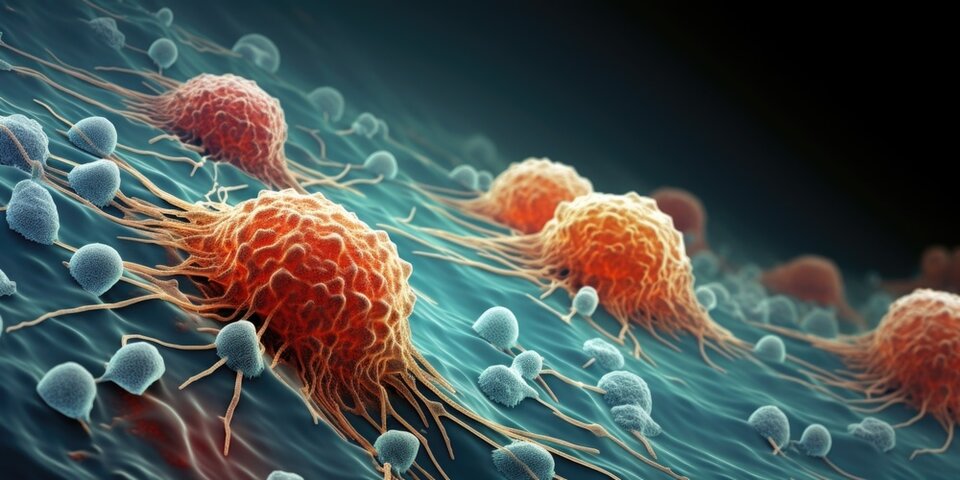
Tumor suppressor genes are often regarded as the body’s natural defense system against cancer. They produce proteins that help maintain and repair DNA, thereby reducing the risk of harmful mutations accumulating. If these genes no longer function properly or are present only in small amounts, the risk of cancer can increase. However, new research suggests that an excess of a certain DNA repair protein can also be a problem. Researchers at Penn State College of Medicine found that excessive activity of the EXO1 gene can damage DNA rather than protect it. Instead of repairing genetic material, an excess of EXO1 can destroy DNA and destabilize the genome—a key hallmark of cancer.
The findings, published in *Nature Communications*, show that EXO1 is overexpressed in 20% to 30% of breast and ovarian cancer cases, as well as in melanoma, testicular cancer, cervical cancer, and cancers of the hepatobiliary system—that is, the liver, gallbladder, and bile ducts—is overexpressed. The team also discovered that cancer cells with unusually high levels of EXO1 behave similarly to cells with BRCA mutations, which are known to increase the risk of hereditary breast and ovarian cancers. Importantly, this BRCA-like behavior occurred even in the absence of a BRCA mutation.
EXO1 Could Help Identify Patients for Targeted Therapies
The researchers found that tumors with elevated EXO1 levels responded to treatments in a manner very similar to that of BRCA-mutated cancers. “While EXO1 does not predict cancer risk, it could potentially serve as a biomarker to predict which patients are more likely to respond to certain chemotherapies, which would lead to more personalized therapies,” said George-Lucian Moldovan, professor of molecular and precision medicine and senior author of the study. “The same drugs intended for the treatment of BRCA-mutated tumors—which have fewer side effects—could potentially also be used to treat EXO1-overexpressing tumors that do not carry BRCA mutations. This would expand the scope of application for these drugs.”
To investigate the role of EXO1, the researchers analyzed tumor data from the “Cancer Genome Atlas,” a cancer genomics program of the National Cancer Institute. They found evidence of EXO1 overexpression in various types of cancer, including breast, skin, liver, and cervical tumors, which is consistent with previous research findings. Elevated EXO1 levels were particularly associated with basal-like breast cancer, an aggressive form of the disease.
How Excess EXO1 Damages DNA
The team then conducted laboratory experiments with human cancer cells. The researchers specifically increased EXO1 production to investigate the effects of excess protein on DNA. In addition, they generated an inactive variant of EXO1 that was produced but had lost its enzymatic function. This allowed them to demonstrate that the observed DNA damage was indeed caused by the protein’s activity. Under normal conditions, EXO1 acts like a pair of molecular scissors, processing damaged DNA and thereby supporting repair processes. However, when overexpressed, this function becomes unbalanced. Instead of processing only damaged DNA, EXO1 increasingly attacks important structures that form during DNA replication.
The researchers identified two main mechanisms: First, excess EXO1 enlarges single-strand DNA gaps that are normally repaired quickly. Second, it degrades so-called reverse replication forks—protective structures that form during DNA replication to prevent genetic damage. Both processes lead to a loss of genetic material and increase the instability of the genome.
The result is an accumulation of severe DNA damage, particularly double-strand breaks. These are considered one of the most dangerous forms of DNA damage and can promote the formation and development of tumors. At the same time, however, they make cancer cells more sensitive to certain chemotherapies and targeted drugs that cause further DNA damage. “Regardless of which signaling pathway is involved, the overexpression of EXO1 leads to the formation and accumulation of toxic DNA damage such as double-strand breaks, which we believe ultimately makes the tumor more sensitive to chemotherapy and enhances cell death,” explained Alexandra Nusawardhana, the study’s lead author, who earned her Ph.D. in biomedical sciences this year at the Penn State College of Medicine.
Why EXO1 Mimics BRCA Mutations
BRCA genes produce proteins that play a central role in maintaining genomic stability. In particular, they protect sensitive DNA structures during DNA replication and support the repair of double-strand breaks through homologous recombination, a particularly precise repair mechanism. When the BRCA genes are mutated, the cells lose part of this protective function. As a result, replication forks become more susceptible to degradation by nucleases, which can contribute to DNA damage, genomic instability, and ultimately the development of cancer.
In the current study, however, the researchers found that excessive EXO1 activity can have similar consequences—even when the BRCA genes function normally and have no mutations. Through its DNA-cleaving activity, excess EXO1 attacks important structures that should be protected during DNA replication. This leads to an increase in DNA gaps, chromosome breaks, and other forms of genetic damage typically observed in BRCA-deficient cells.
The team also demonstrated that EXO1 acts in conjunction with the DNA repair protein MRE11. Both enzymes promote the degradation of replication structures and enlarge single-strand DNA gaps, thereby facilitating the formation of dangerous double-strand breaks. According to the researchers, the overexpression of EXO1 thus functionally produces the same state as the loss of the BRCA signaling pathway in BRCA-mutated tumors. Although the underlying causes are different, the biological consequences are very similar.
This phenomenon is often referred to as “BRCAness.” It describes tumors without a BRCA mutation that nevertheless exhibit the same molecular vulnerabilities as BRCA-mutated cancer cells. Because their ability to repair DNA damage is limited, such tumors are often particularly sensitive to certain therapies, including PARP inhibitors such as olaparib and platinum-based chemotherapeutic agents.
However, one important difference remains: BRCA mutations can be inherited and increase an individual’s cancer risk even before a tumor develops. In contrast, EXO1 overexpression is a change that arises within tumor cells and is not passed on to offspring. Furthermore, it remains unclear whether elevated EXO1 levels directly contribute to cancer development or whether they primarily influence the behavior of existing tumors.
Possible Implications for Cancer Treatment
Since EXO1-overexpressing tumors behaved similarly to BRCA-mutated tumors in many respects, the researchers investigated whether they also respond similarly to certain cancer therapies. The focus was on olaparib, a PARP inhibitor that is already being used successfully to treat BRCA-mutated breast, ovarian, prostate, and pancreatic cancers. PARP inhibitors block key DNA repair mechanisms in tumor cells. Since BRCA-deficient cells already have limited repair capabilities, they can no longer compensate for the additional DNA damage and die.

The study showed that tumors with elevated EXO1 expression were also particularly sensitive to olaparib. Apparently, the overexpression of EXO1 creates a BRCA-like state (“BRCAness”) that makes tumor cells susceptible to the same therapeutic strategies. The results suggest that, in the future, patients without a detectable BRCA mutation could also benefit from PARP inhibitors, provided their tumors exhibit high levels of EXO1.
In addition, the researchers investigated the effect of cisplatin, a commonly used chemotherapy drug that causes DNA damage and thereby prevents cancer cells from dividing. Here, too, EXO1-overexpressing tumors showed increased sensitivity. Since these tumors are already under considerable replicative stress and exhibit increased DNA damage, their ability to repair additional damage appears to be limited. This could explain why they respond particularly well to cisplatin.
Another important aspect of the study is the potential role of EXO1 as a biomarker. While BRCA mutations occur in only a relatively small proportion of patients, EXO1 overexpression has been detected in several types of cancer, including breast, ovarian, skin, cervical, and liver and biliary tract tumors. Measuring EXO1 levels could therefore help identify patients who are likely to respond particularly well to PARP inhibitors or platinum-based chemotherapies.
In the long term, this could contribute to more personalized cancer treatment. Instead of selecting therapies primarily based on the organ of origin of a tumor, greater emphasis would be placed on the tumor’s molecular characteristics and genetic alterations. According to the researchers, EXO1 could therefore be an important marker in the future for making more targeted treatment decisions and improving the effectiveness of existing therapies. However, further research and clinical trials involving patients are needed to confirm this potential.